‘Fork in the road’: CEO of Amazon-backed Rivian on why carmakers need to invest in EVs | Automotive industry
If you’re shopping for an EV right now, Rivian CEO RJ Scaringe’s warning is less about Wall Street drama and more about a very practical driveway question: which automakers will still be improving their cars five years after you buy one?

Rivian’s argument: the risk is falling behind on software, not just batteries
Scaringe’s central point is blunt: automakers that stay focused on fossil-fuel engines could be “woefully behind” technologically by the end of the decade. He framed the decision as a tradeoff between short-term financial comfort and the heavy investment required in EV platforms, especially software.
That distinction is important. A buyer comparing a petrol SUV, a hybrid pickup, and an EV may naturally focus on the out-the-door price, monthly payment, range, and whether home charging is realistic. Those are still the right first questions. But Scaringe is pointing to something that shows up later in ownership: whether the vehicle’s electronics and software are built to evolve.
According to The Guardian’s report, he criticized older vehicle designs that scatter computer chips throughout the car, rather than using a more centralized architecture that can be updated and modified more easily. He said relying on a single computer can reduce production costs by “thousands of dollars.”
For consumers, I’d translate that into a simple checklist:
- Can the car receive meaningful software updates after purchase?
- Does the brand have a serious EV platform strategy, or is the EV a side project?
- Are key functions—charging, route planning, driver-assist features, cabin controls—improving over time?
- Is the automaker still investing in the vehicle family you’re buying?
That doesn’t mean every gasoline or hybrid model is suddenly a bad buy. But if you’re paying EV money, you should expect EV-level long-term support.
Why this lands differently for Rivian buyers
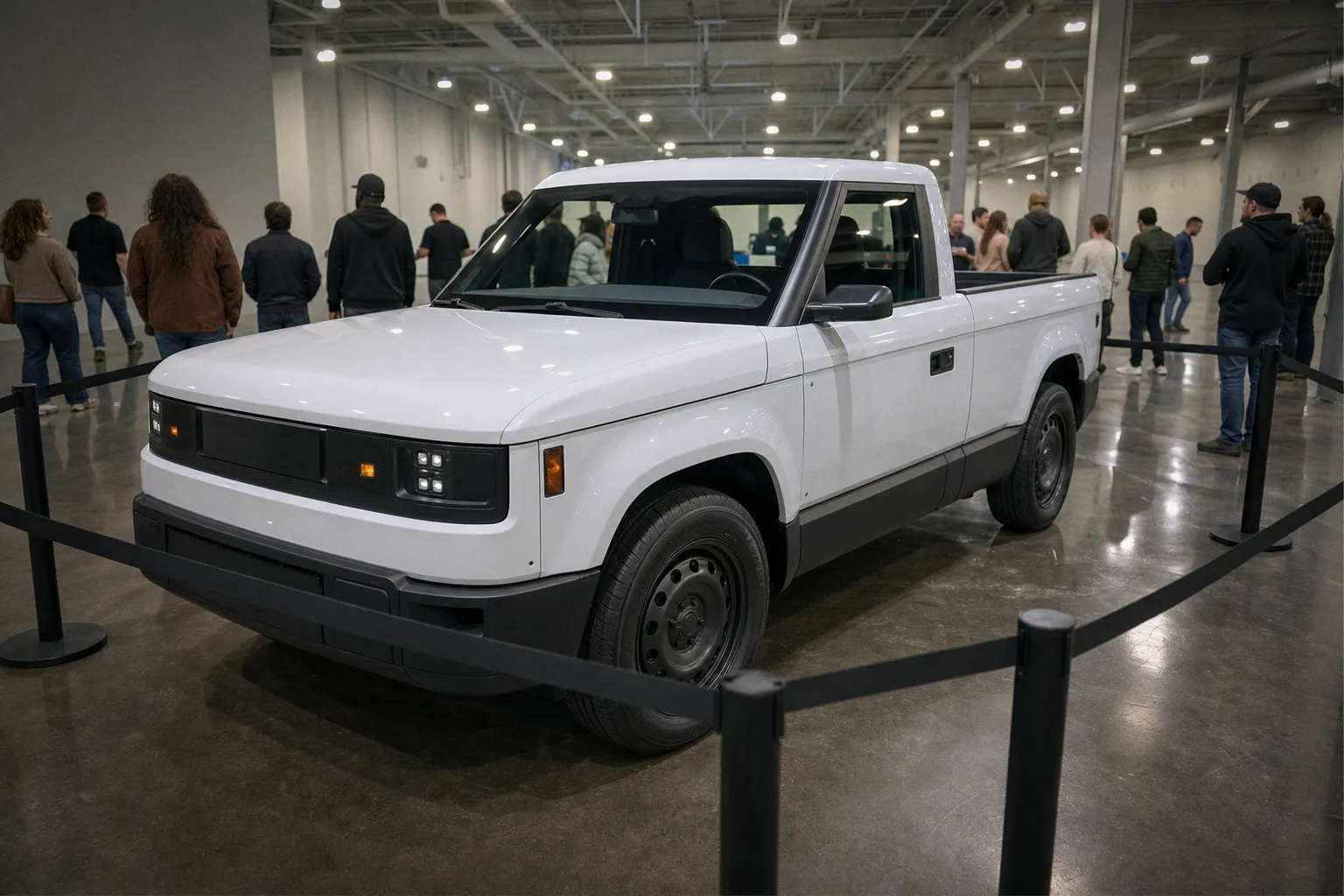
Rivian is not making this argument from the sidelines. The company has been spending heavily to build its EV lineup and software capabilities, and The Guardian reports that its R2 SUV has just started deliveries in the US. Scaringe described the R2 as “make or break” for Rivian as the company tries to turn a profit for the first time.
That’s the part I’d keep front and center if you’re considering a Rivian. The brand has real EV credibility, but it is still in a high-stakes phase. The company was founded in 2009, delivered its first EV in 2021, and, according to the report, lost $3.6 billion in 2025 amid heavy investment in the R2 and autonomous driving abilities.
There are also signs of outside confidence in Rivian’s tech. Amazon’s investment includes a deal for up to 100,000 delivery vans, and Rivian and Volkswagen agreed to a $5.8 billion electric tech and software joint venture in 2024. The Guardian also reports that Uber invested $1.25 billion in a deal that could lead to the sale of 50,000 robotaxis.
For a shopper, that mix cuts both ways. Rivian’s software-first pitch is exactly what many EV owners want: a vehicle that feels modern after more than one model year. But the R2’s importance to the company means I would be extra disciplined before putting money down: verify delivery timing, service access, warranty terms, charging compatibility, and the real total cost after any tax rebate hurdles.
What I’d watch before choosing sides
The broader industry backdrop is messy. The Guardian reports that much of the US and European auto industry has lobbied to slow the EV transition, while Ford, General Motors, Honda, Stellantis, and Volkswagen have collectively written off more than $70 billion from previous EV investments, according to Reuters as cited in the report.
That does not automatically tell you which car to buy this month. It does tell you where to look harder. If an automaker is pulling back, delaying EV programs, or leaning heavily into profitable petrol and hybrid trucks, I’d want clearer answers before committing to one of its EVs.
My practical advice: don’t buy a promise, buy an ecosystem. For a grocery run EV or a family SUV, the winning choice is the one with dependable charging, useful range, fair pricing, nearby service, and software the company is still actively building. Rivian’s warning may be self-interested, but the buyer lesson is solid: in EVs, the car you take home is only part of what you’re paying for.