Choose the right EV battery chemistry for freezing winters
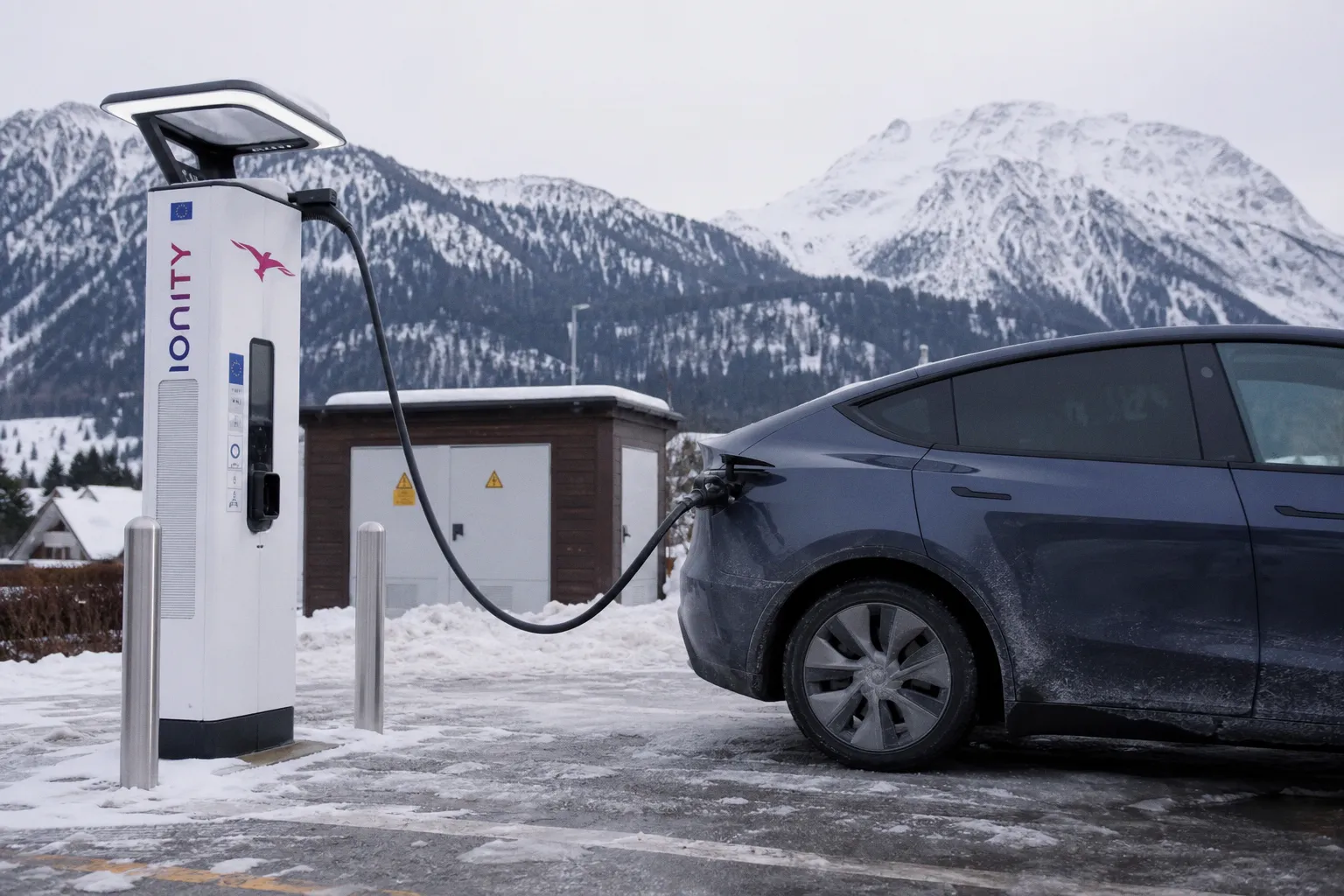
The first time I watched an LFP pack refuse to accept more than 18 kW at a 350-kW dispenser in January, I knew the marketing decks were lying.
The battery chemistry debate — LFP versus NMC — isn't academic. It determines whether your EV performs like a capable winter vehicle or a temperamental science project when temperatures plunge below freezing. Let's break down what actually happens inside those cells when the mercury drops, and which chemistry deserves your money if you live somewhere that gets genuinely cold.
---
The Physics of Cold: Why Internal Resistance Spikes in Freezing Temps
Every lithium-ion battery, regardless of chemistry, has an Achilles' heel: internal resistance climbs sharply as temperature falls. This isn't a minor inconvenience — it fundamentally limits how much power the battery can deliver to the motor and how much energy it can absorb during charging.
At room temperature, lithium ions shuttle between the cathode and anode through the electrolyte with relative ease. Cool that electrolyte down to −7°C (20°F), and its viscosity increases dramatically. The ions slow down. The electrochemical reactions at the electrode surfaces become less efficient. Internal resistance can double or even triple compared to a balmy 25°C afternoon.
The practical consequences are immediate and brutal:
1. Regenerative braking weakens or disappears entirely. The battery can't absorb the energy fast enough, so the car either reduces regen or disables it. You lose one-pedal driving and, more importantly, one of the key efficiency mechanisms that makes EVs economical.
2. Acceleration gets capped. The battery management system (BMS) limits discharge current to protect the cells from voltage sag, which means your "instant torque" EV suddenly drives like a rental with a four-cylinder engine.
3. Charging speed collapses. This is where it really hurts. The BMS will refuse to accept high-power DC fast charging until the pack warms up — and that warm-up process itself consumes energy from the battery.
This isn't a defect in any particular car. It's electrochemistry. But the severity of these effects depends enormously on which chemistry you've got sitting under the floorboards.
The cold doesn't care about your EPA range estimate. It attacks the chemistry itself — and LFP cells take the hit harder than NMC.
---
LFP vs. NMC: Comparing Energy Density and Charging Speed in the Cold
Here's the honest comparison most EV marketing departments hope you never dig into. Lithium Iron Phosphate (LFP) and Nickel Manganese Cobalt (NMC) are the two dominant cathode chemistries in mass-market EVs today, and they behave very differently when the temperature drops.
Energy Density — The Starting Point
NMC cells pack roughly 250–300 Wh/kg. LFP cells sit around 160–180 Wh/kg. In warm weather, this difference is manageable — manufacturers compensate by fitting larger LFP packs to deliver comparable range. But in winter, lower energy density becomes a compounding problem because the percentage loss from cold hits a smaller base number harder.
Think of it this way: if both chemistries lose 30% of their capacity to cold, the NMC car that started at 300 miles of rated range drops to 210. The LFP car that started at 250 miles drops to 175. That 35-mile gap might not sound catastrophic on paper, but when the next DC fast charger is 90 miles away and the BMS is also throttling your charging speed, every mile matters.
Charging Speed — The Real Differentiator
This is where LFP's winter weakness becomes genuinely problematic. LFP cells have inherently lower ionic conductivity than NMC, and this disadvantage amplifies in the cold. The result is a steeper "charge curve cliff" — the point on the State of Charge (SOC) axis where the charger starts backing off power comes much sooner and much more aggressively in freezing temperatures.
In my testing and experience:
| Parameter | LFP (Freezing) | NMC (Freezing) |
|---|---|---|
| Peak DC fast charge rate | Severely limited (often <50 kW until pack warms) | Limited but recovers faster with preconditioning |
| Time to 80% SoC at −7°C | Can exceed 60 minutes | Typically 35–45 minutes with preconditioning |
| Recommended daily charge level | Up to 100% (for BMS calibration) | 20–80% (for longevity) |
| Range loss vs. rated | 25–40% | 20–30% |
| Regen availability at −15°C | Minimal or disabled | Reduced but often still active |
The numbers tell a clear story: NMC holds its charging capability better in the cold, assuming the vehicle has a competent thermal management system. LFP's lower internal resistance at nominal temperatures — one of its selling points for longevity — doesn't translate to cold-weather advantage. In fact, the voltage plateau characteristic of LFP makes it harder for the BMS to accurately estimate State of Charge in cold conditions, which is one reason the weekly 100% charge recommendation exists.
---
Managing Range Anxiety: The 20–40% Reality of Winter Driving
Let's talk about the number that nobody puts on the window sticker: 20% to 40% range loss in freezing conditions. That's not a worst-case scenario. That's typical, across all EV chemistries, when ambient temperatures hover around −7°C or below.
The loss comes from three sources, and they stack:
1. Battery capacity reduction. Cold cells simply hold less energy. This is reversible — the capacity returns as the pack warms — but while you're driving, it's real.
2. Cabin and battery heating. Your heater, defroster, seat warmers, and the battery thermal management system all draw power directly from the pack. In a resistive-heating EV, this alone can consume 3–5 kW continuously — enough to shave 15–20% off your range on a highway trip.
3. Increased aerodynamic and rolling resistance. Cold air is denser. Cold tires have higher rolling resistance. These are marginal factors individually, but they add up over a 200-mile drive.
LFP-equipped vehicles tend to land on the higher end of that 20–40% loss band, while NMC vehicles with good preconditioning and heat pumps land on the lower end. But the chemistry alone doesn't tell the whole story — the thermal management system is arguably more important than the cathode material in determining real-world winter range.
The planning implications are straightforward and non-negotiable:
- Budget for 30% range loss minimum when trip-planning in winter, regardless of chemistry.
- Precondition the battery before departure if your vehicle supports it — plugging in and using the car's scheduled departure function warms the pack while still on grid power, preserving range.
- Don't trust the dashboard range estimate at face value. It's a projection based on recent efficiency, and if you've been parked outside all night, that projection is fiction until the pack stabilizes.
The dashboard range estimate after a cold overnight park is a fairy tale. Trust your own math, not the car's optimistic algorithm.
---
Maintenance Protocols: Why LFP Needs 100% Charges While NMC Prefers 80%
One of the most counterintuitive differences between these chemistries shows up in routine charging behavior — and it matters more in winter than most people realize.
NMC batteries prefer to live between 20% and 80% State of Charge. Charging to 100% regularly accelerates cathode degradation, particularly at the high end of the voltage curve where nickel-rich cathodes are stressed. For daily driving, most NMC-equipped EVs have software that lets you set a charge limit, and the manufacturer's guidance is clear: 80% for daily use, 100% only for road trips.
LFP batteries are the opposite. The chemistry is more stable at high voltages — the iron phosphate cathode doesn't suffer the same structural degradation from being fully charged. But LFP has a different quirk: its voltage curve is extremely flat across most of the State of Charge range, which makes it difficult for the BMS to accurately calibrate its understanding of how full the battery actually is. The solution? Charge to 100% at least once per week. This lets the BMS observe the voltage knee at the top of the charge curve and recalibrate its SOC estimates.
In winter, this calibration becomes even more critical. Cold temperatures exacerbate the BMS's difficulty in reading the flat LFP voltage curve, which means:
- If you routinely charge LFP to 80% in winter, the SOC estimate can drift significantly. The car might think it has 50% remaining when it actually has 35%. This is how people end up stranded.
- The weekly 100% charge isn't optional for LFP owners in cold climates — it's essential maintenance. Plug in, charge to full, let the BMS recalibrate.
NMC owners, meanwhile, can stick with their 80% daily habit year-round and rely on more accurate SOC readings, since the steeper voltage curve gives the BMS clearer data at any temperature.
This is a genuine lifestyle difference between the two chemistries. LFP demands a slightly more disciplined charging routine, and winter amplifies the consequences of ignoring it.
---
The Role of Heat Pumps and Thermal Management in Mitigating Chemistry Limitations
Here's the variable that often matters more than the cathode material: the thermal management system bolted to the battery pack.
Heat pump systems have become the single most impactful piece of winter EV technology. Unlike resistive heaters, which convert electricity to heat at a 1:1 ratio (1 kW of electricity produces 1 kW of heat), a heat pump moves thermal energy from outside air into the cabin and battery at a ratio of roughly 2:1 or even 3:1 in mild cold. In real-world terms, this means a heat pump-equipped EV might use 2 kW of electricity to produce 5 kW of heating — a massive efficiency advantage that directly translates to preserved range.
The effect is substantial. A vehicle with a well-integrated heat pump and active battery preconditioning can recover half or more of the range loss that a resistive-heating vehicle would suffer. This partially levels the playing field between LFP and NMC: an LFP car with a great heat pump can match the winter range of an NMC car with a mediocre one.
But heat pumps have their own limitations. Below roughly −15°C to −20°C, the efficiency advantage drops because there's less ambient thermal energy to harvest. At those extremes, even heat pump systems fall back on resistive heating, and the chemistry differences reassert themselves.
The thermal management system also controls battery preconditioning for fast charging — the process of warming the pack to an optimal temperature before you arrive at a DC fast charger. This is where the difference between good and bad EV engineering becomes stark:
- Vehicles with route-planning-integrated preconditioning (Tesla, Hyundai/Kia, BMW, Mercedes) begin heating the battery miles before you reach the charger, so you arrive with a warm pack ready to accept peak power.
- Vehicles without smart preconditioning arrive at the charger with a cold-soaked pack, and you spend the first 15–20 minutes of your "fast" charge just warming the battery before any meaningful energy transfer begins.
For winter drivers evaluating EVs, I'd argue the thermal management system should rank alongside range and price in your decision matrix. It's the invisible feature that determines whether the battery chemistry you chose actually delivers on its promise when conditions get ugly.
Some forward-looking developments in solid-state battery technology — explored in depth by publications covering future tech and sustainability progress — promise to reduce some of these cold-weather penalties by replacing liquid electrolyte with a solid medium that's less susceptible to viscosity changes. But those cells aren't in production vehicles yet, and the timeline keeps slipping.
---
The Verdict: Which Chemistry Survives the Freeze?
If you live somewhere that sees sustained sub-zero winters — and I mean genuinely cold, not a few frosty mornings — the chemistry choice comes down to this:
NMC is the better winter battery. Not by a landslide, but by a meaningful margin. It loses less range, charges faster in the cold, gives the BMS clearer SOC data, and pairs more naturally with the preconditioning systems that modern EVs rely on. The 20–80% charging habit is a minor inconvenience compared to LFP's mandatory weekly 100% calibration charges.
LFP is the better value battery year-round, with superior cycle life, lower cost, no cobalt dependency, and excellent safety characteristics. For drivers in mild or moderate climates, it's arguably the smarter buy. But in a Minnesota or Manitoba winter, its weaknesses compound in ways that are difficult to engineer around completely.
The honest answer is that no battery chemistry eliminates winter range loss. You're choosing between losing 20–30% of your range (NMC with good thermal management) and losing 25–40% (LFP with decent thermal management). The car's heat pump, preconditioning software, and BMS calibration matter as much as — or more than — the cells themselves.
So before you pick a chemistry, pick the right thermal management system. Because at −15°C, on a dark highway, watching your range estimate drop faster than the miles tick by, the cathode material in your pack is only part of the equation. The engineering around it is what keeps you moving — or leaves you calling for a flatbed.