Compare highway range of three electric SUVs under $50,000
# Real-World Highway Range: Tesla Model Y vs. Ioniq 5 vs. ID.4
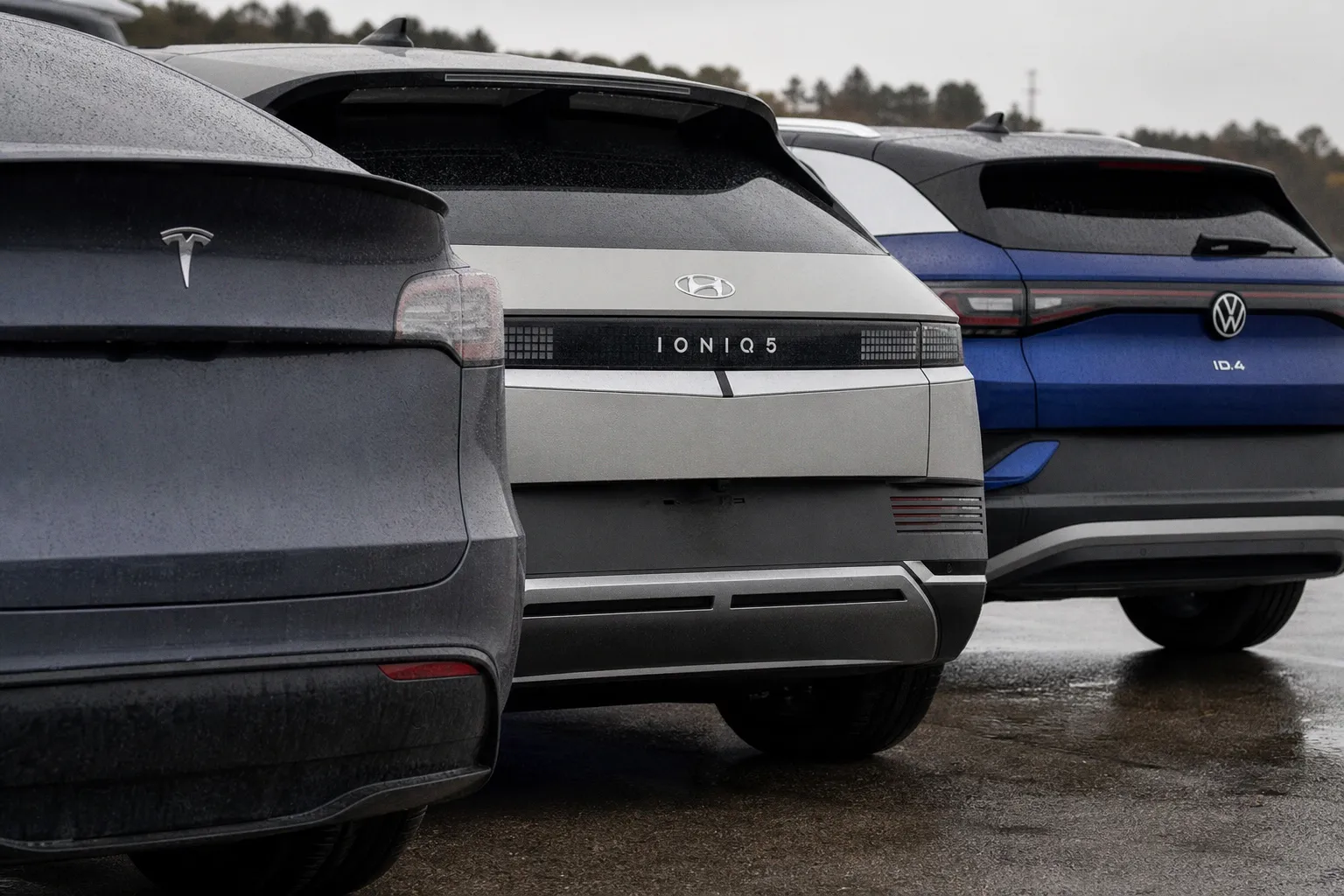
The sub-$50,000 electric SUV segment is defined by this gap between certified efficiency and sustained highway performance. Buyers see EPA ratings on the window sticker; drivers experience drag, thermal load, and rolling resistance. Understanding the second number — the one you actually drive — requires instrumented test methodology and an honest look at the underlying physics. This breakdown goes through the highway performance of three benchmark models, explains where each leads, where each loses efficiency, and lays out the methodology for estimating your own real-world range before you commit to a purchase.
The Gap Between EPA Estimates and High-Speed Reality
EPA test cycles are a composite driving profile. The multi-phase test includes urban low-speed operation, higher-speed segments, and lab-controlled climate conditions. The result is a single composite figure designed for cross-vehicle comparison, not for any specific use case. For highway-focused buyers, that figure functions as an upper bound rather than a typical operational number.
Real-world highway testing at 70-75 mph consistently shows 10-20% reductions from EPA ratings. The exact percentage depends on three variables:
- Aerodynamic drag coefficient (Cd)
- Frontal area in square meters
- Powertrain efficiency at sustained loads
A 10% shortfall versus a 20% shortfall is the difference between 288 miles and 256 miles of usable highway range on a Model Y Long Range RWD. That delta determines whether you arrive at a destination charger with 8% state of charge or run a buffer-bleeding leg that requires a slow Level 2 session to recover.
At 75 mph, drag force scales with velocity squared. A 5 mph increase from 65 to 70 raises energy demand more than the previous 10 mph increase from 55 to 65.
The EPA does not publish a dedicated 75-mph constant-speed test. Independent testing outlets do. Their instrumented runs — temperature-controlled, GPS-verified, repeated across multiple drivers — provide the data points this analysis rests on. Marketing claims and projected figures are not part of the calculation.
Aerodynamics and Efficiency: Why the Model Y Leads the Pack
The 2024 Tesla Model Y Long Range RWD carries a drag coefficient of 0.23. That figure places it among the lowest-production SUVs in any segment, gas or electric. Lower Cd translates directly into less energy spent pushing air aside at sustained highway speed. The vehicle's frontal area sits near 2.23 m², yielding a drag area (Cd × A) of approximately 0.513 m².
The Hyundai Ioniq 5 presents a different aerodynamic profile. Its squared-off, retro-styled body produces a Cd of approximately 0.288. Frontal area is larger, near 2.42 m². Drag area calculates to 0.697 m² — a 36% increase over the Model Y. The Ioniq 5 pays a measurable aerodynamic penalty for its design language, which prioritizes headroom and visual differentiation.
The Volkswagen ID.4 Pro RWD falls between the two: Cd around 0.28, frontal area near 2.45 m², drag area of roughly 0.686 m². The drag profile is functionally equivalent to the Ioniq 5 despite visibly different sheet metal. The numbers are decided by frontal area as much as by surface smoothness.
| Parameter | Tesla Model Y LR RWD | Hyundai Ioniq 5 LR RWD | Volkswagen ID.4 Pro RWD |
|---|---|---|---|
| EPA range | 320 mi | 303 mi | 291 mi |
| Drag coefficient (Cd) | 0.23 | 0.288 | 0.28 |
| Frontal area (est.) | 2.23 m² | 2.42 m² | 2.45 m² |
| Drag area (Cd × A) | 0.513 m² | 0.697 m² | 0.686 m² |
| Battery (usable) | ~82 kWh | 77.4 kWh | 82 kWh |
| Peak DC charge rate | 250 kW | 235 kW | 175 kW |
| Real-world 70 mph efficiency | 3.5–3.8 mi/kWh | 3.0–3.1 mi/kWh | 3.1–3.3 mi/kWh |
The Model Y's aerodynamic advantage translates directly into highway energy consumption. Real-world instrumented runs report Model Y efficiency between 3.5 and 3.8 mi/kWh at 70 mph on standard 19-inch wheels. The Ioniq 5 and ID.4 typically land between 3.0 and 3.3 mi/kWh under matched conditions. That gap compounds over distance: every 100 highway miles costs the Model Y roughly 27 kWh versus 31 kWh in the Ioniq 5.
Wheel choice modifies these numbers significantly. The Model Y's optional 20-inch induction wheels drop efficiency by 5-7% on the highway. The ID.4's available 20-inch Statement wheels cost roughly 6% range compared to the 18-inch standard fitment. Tire compound and sidewall height both feed into rolling resistance, which matters more at lower speeds but is not negligible at 70+ mph.
Analyzing the Highway Performance of Ioniq 5 and ID.4
The Ioniq 5 Long Range RWD is Hyundai's strongest sub-$50,000 entry in this comparison. EPA range of 303 miles is competitive on paper. The 77.4 kWh usable battery pack is smaller than the Model Y's, but the 800V architecture supports a peak DC charge rate of 235 kW on a 350 kW charger. A 10-80% charge session completes in roughly 18 minutes — about 10 minutes faster than a comparable Model Y stop on V3 Supercharging hardware.
The highway weakness is drag. The squared silhouette costs range at sustained speeds. Instrumented 75-mph testing places Ioniq 5 efficiency near 3.0 mi/kWh, occasionally dipping to 2.8 mi/kWh in cold-weather conditions. Translated to a full battery, that delivers approximately 230-240 miles of usable highway range — a 20% reduction from the EPA composite.
The ID.4 Pro RWD posts 291 miles EPA. Real-world efficiency at highway speeds typically lands between 3.1 and 3.3 mi/kWh, depending on wheel size and ambient temperature. Eighteen-inch wheels preserve more range; twenty-inch wheels reduce it. Net usable highway range runs near 252-265 miles on a full charge — a 9-13% shortfall, marginally better than the Ioniq 5 in most instrumented runs despite a near-identical drag area.
The ID.4's lower 175 kW peak charge rate is the offset for buyers planning long-distance travel. A 10-80% DC fast-charge session runs 28-32 minutes on a 350 kW unit. That adds time but not range penalty. For drivers with consistent access to home charging and infrequent road trips, the ID.4's charging speed is largely irrelevant.
Thermal management is the third differentiator. The Model Y uses a heat pump system with a passive coolant loop for the battery, which preserves more energy in moderate climates. The Ioniq 5 also uses a heat pump but routes thermal conditioning through a more complex architecture. The ID.4 relies on a simpler resistive heater with a heat pump option on higher trims. In cold-weather operation (sub-40°F / 4°C), the Model Y's thermal management extracts 5-10% more range than the Ioniq 5 and noticeably more than the ID.4 Standard trim without the heat pump.
How Speed and Drag Coefficients Dictate Your Road Trip Range
Aerodynamic drag follows a defined physics relationship:
F_drag = 0.5 × ρ × v² × Cd × A
ρ is air density, v is velocity, Cd is drag coefficient, A is frontal area. The v² term dominates at highway speeds. Energy consumption per mile scales with drag force, so energy use scales roughly with velocity squared. A vehicle delivering 4.0 mi/kWh at 60 mph typically drops to 3.2 mi/kWh at 70 mph and 2.7 mi/kWh at 75 mph.
The practical consequence: driving 75 mph instead of 65 mph costs 20-30% more energy per mile in most electric SUVs. The 10 mph time savings on a 200-mile leg is roughly 27 minutes. The energy cost is roughly 50 additional miles of range burned. For most road trips, that trade is unfavorable unless the destination charger is unreliable or absent.
Driving 75 mph instead of 65 mph costs 20-30% more energy per mile. The 10 mph difference is rarely worth the time saved on trips under 200 miles.
Temperature compounds the drag penalty. Cold-weather operation below 40°F adds another 10-25% energy demand for cabin heating and battery thermal management. A Model Y Long Range RWD delivering 295 miles of summer highway range may deliver 220 miles in winter conditions. The Ioniq 5 and ID.4 lose proportionally similar range, but the absolute remaining miles are lower.
Wind direction adds drag the EPA cycle cannot capture. A 15 mph sustained headwind on top of a 75 mph ground speed creates an effective 90 mph airspeed. Range drops another 5-10% on those legs. Crosswinds are less punitive but introduce instability in taller vehicles like the ID.4, which sometimes requires speed reduction to maintain driver confidence.
Elevation matters more than most buyers expect. Ascending a mountain pass at 6% grade for 20 miles costs the equivalent of roughly 40 miles of flat highway range. Regenerative braking recovers 60-70% of that energy on the descent, but only if the driver avoids extended brake use and lets the regen system handle deceleration.
Practical Strategies for Estimating Real-World Highway Travel
The EPA number is the starting point. The actual highway figure requires three steps:
1. Locate instrumented 75-mph test data for the specific trim and wheel size. Independent testing outfits publish efficiency in mi/kWh at constant highway speed, not the EPA composite. Cross-reference multiple sources if possible.
2. Multiply usable battery capacity by that efficiency. Tesla Model Y Long Range RWD: 82 kWh × 3.6 mi/kWh = 295 miles at 70 mph. Hyundai Ioniq 5 Long Range RWD: 77.4 kWh × 3.05 mi/kWh = 236 miles. Volkswagen ID.4 Pro RWD: 82 kWh × 3.2 mi/kWh = 262 miles.
3. Apply a buffer for conditions. Cold weather subtracts 15%. Strong headwind subtracts 10%. Mountain pass subtracts 20%. Combine these conservatively rather than averaging them. A road-trip planner should assume the worst-case scenario, not the best case.
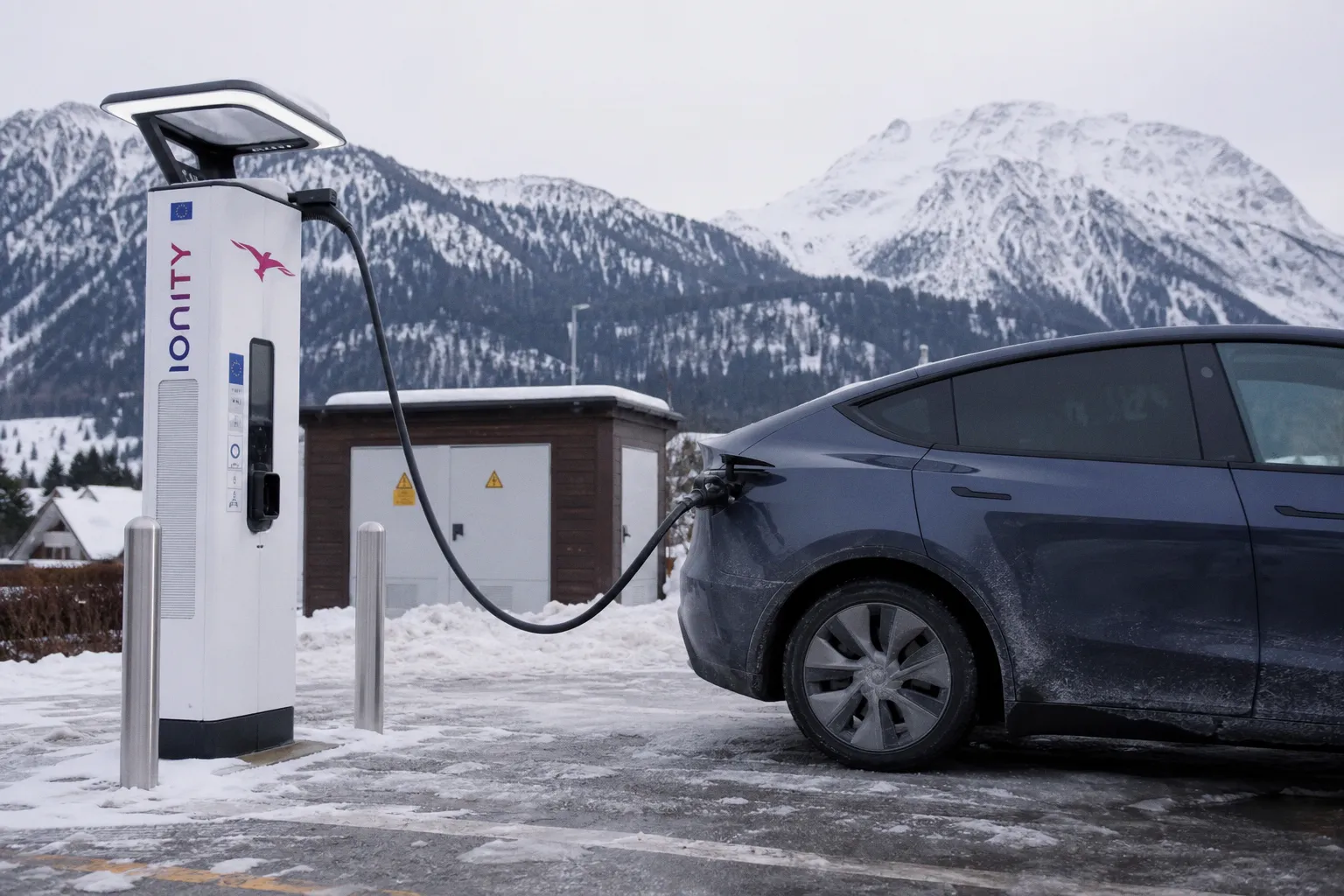
Charging infrastructure reshapes the calculus. The Model Y's access to the Tesla Supercharger network (NACS connector standard on 2024+ Model Y units) provides more reliable high-speed charging on major interstates. The Ioniq 5 and ID.4 depend on CCS networks — improving in coverage but still inconsistent in rural areas. For drivers who regularly travel secondary highways, this network difference may outweigh the per-charge range gap.
Tire pressure is the single most controllable efficiency variable. Operating at the manufacturer's recommended pressure (typically 42-45 psi for these three SUVs) versus 35 psi can deliver a 3-5% range improvement. Check pressure monthly; pressure drops roughly 1 psi per month under normal operation and faster in cold weather.
Wheel swap is the highest-impact upgrade for existing owners. Switching from 20-inch wheels to 18- or 19-inch wheels recovers 5-8% highway range on the ID.4 and Ioniq 5. The Model Y's range penalty on 20-inch wheels is smaller but still measurable.
For buyers tracking where the segment is heading, broader EV and battery technology developments continue to push efficiency and charging speed forward — the latest reporting on next-generation battery chemistries and infrastructure tracks these shifts in detail.
Verdict
The Tesla Model Y Long Range RWD is the highway efficiency leader in the sub-$50,000 electric SUV segment. Its 0.23 drag coefficient and proven 3.5-3.8 mi/kWh at 70 mph translate to 280-310 miles of real-world interstate range — 30-50 miles more per charge than either competitor. The 0.23 Cd is structural, not cosmetic, and the aerodynamic advantage compounds over every mile of sustained driving.
The Hyundai Ioniq 5 Long Range RWD is the second-best highway performer in this comparison, but it leads on charging speed. The 800V architecture and 235 kW peak rate cut charging stops to 18 minutes. For road-trippers who prioritize minimum time per stop over maximum miles per charge, the trade is rational.
The Volkswagen ID.4 Pro RWD delivers adequate highway range (around 250 miles real-world) at the lowest entry price of the three. It is the value option in this comparison — neither the efficiency leader nor the charging leader, but a competent all-rounder for buyers who keep road trips short or rely on home charging for daily driving.
For buyers prioritizing highway range above all other factors under $50,000, the data points to the Model Y. The aerodynamic advantage is real, the efficiency is repeatable, and the Supercharger network access removes much of the charging variability that complicates CCS-based road trips. The Ioniq 5 and ID.4 remain rational choices for buyers whose priorities center on charging speed, interior design, or entry price — but neither closes the highway range gap that physics dictates.