Colorado Adds $2,500 Bonus for Affordable Electric Vehicle Purchases
According to the Colorado Energy Office, the state has added a new $2,500 bonus for electric vehicles with an MSRP under $35,000, stacking on top of the existing $5,000 state tax credit.
Colorado just made it a lot easier to justify going electric—if you're shopping in the affordable end of the market. According to the Colorado Energy Office, the state has added a new $2,500 bonus for electric vehicles with an MSRP under $35,000, stacking on top of the existing $5,000 state tax credit. That's potentially $7,500 off the sticker price before you even talk to the finance manager, and for buyers who've been watching EV prices from the sidelines, this changes the math in a meaningful way.
What this actually looks like at the dealership
Let's break this down in real-world terms, because a headline number and an out-the-door price are two very different things. The existing $5,000 Colorado tax credit has been around—it applies to new EVs purchased by state residents. Now, if the vehicle's MSRP sits under $35,000, you tack on another $2,500. That $7,500 combined state incentive doesn't even factor in the federal tax credit, which for qualifying buyers and models can add up to another $7,500.
So you're potentially looking at a $35,000 EV that nets out closer to $20,000 after incentives. That's base-trim Honda Civic money for a brand-new electric car with no gas station visits and dramatically lower maintenance costs over the ownership period. For families juggling a car payment, insurance, and—let's be honest—everything else, this kind of savings isn't abstract. It's a couple hundred dollars a month that stays in your budget.
Which vehicles actually fit under the $35,000 line
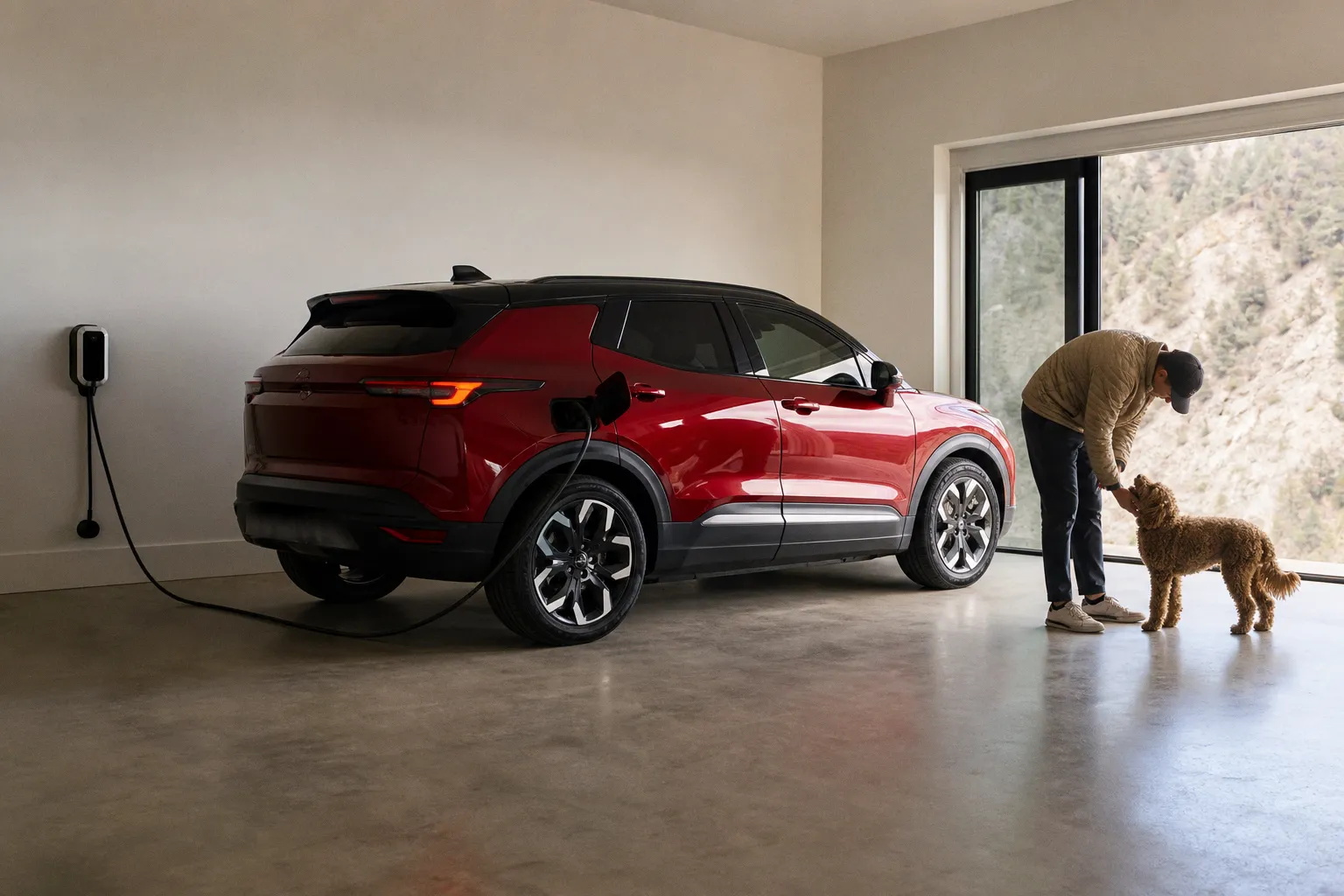
This is where the practical question gets interesting. The $35,000 MSRP cap eliminates a lot of the EVs you see advertised most aggressively—most versions of the Tesla Model 3, the Hyundai Ioniq 5, the Ford Mach-E all start above that threshold in their current configurations. What does qualify? Base-trim models like the Chevrolet Equinox EV, the Nissan Leaf (if still in production in your model year), and certain configurations of the Hyundai Kona Electric and Kia Niro EV tend to land under that line.
Here's my honest take: don't just look at the window sticker. Some manufacturers advertise a starting MSRP that's technically under $35,000 but nearly impossible to find on a lot without add-ons pushing you over. Before you fall in love with a specific model, confirm the exact MSRP of the vehicle you're actually test-driving, not the one in the brochure. Dealers love destination charges and mandatory packages, and those can quietly push you out of eligibility.
If you're the kind of person who loads up the car for a weekend trail run and needs something reliable that won't drain your wallet at the trailhead parking lot, an affordable EV with these incentives suddenly makes a lot of sense—especially since short-trip city driving is exactly where EVs shine in efficiency.
The timing question and what to watch
A few things worth tracking before you rush to a dealership. First, confirm whether this bonus applies at the point of sale or only when you file your state taxes. Colorado's existing $5,000 credit is claimed on your tax return, which means you're still financing the full purchase price upfront and waiting for reimbursement. If the $2,500 bonus works the same way, plan your cash flow accordingly—don't assume it comes off the price tag the day you sign.
Second, keep an eye on inventory. A $35,000 cap narrows the field considerably, and if demand spikes in Colorado because of this incentive, the models that do qualify could get harder to find at MSRP. We've seen this pattern before in states with generous EV incentives—dealer markups can quietly eat into your savings if you're not paying attention.
Finally, the broader EV market context matters. Honda just announced a $4.4 billion investment to build out its Ohio EV manufacturing hub, and automakers worldwide are ramping production. More affordable models are coming, and Colorado's incentive structure is clearly designed to catch that wave. If none of today's under-$35,000 options work for your needs, waiting six to twelve months could bring better choices—and this bonus will still be there to sweeten the deal.
The bottom line: if you're a Colorado resident who's been on the fence about an EV, this is the most compelling financial window we've seen at the affordable end of the market. Do your homework on exact MSRPs, confirm the tax filing mechanics, and test-drive what actually fits your life—not just what fits a spec sheet.