Best Electric Car Range: What Our Highway Test Revealed
The best electric car range is not simply the biggest battery pack. That is the lazy answer, and it fails quickly once the road flattens out, the speed rises, and regenerative braking becomes mostly decorative. In our highway work, the cars that go farthest are the ones that waste the least: low drag, disciplined thermal management, efficient motors, sensible tires, and software that does not panic when the pack gets warm.
Why highway range punishes EVs harder than city range
Electric vehicles are spectacularly good in town. They sip energy at low speeds, harvest some of it back under braking, and avoid the wasteful idling that makes combustion cars look prehistoric in traffic. That is the polite part of the story.
The interstate is less polite.
At 70 to 75 mph, aerodynamic drag becomes the main tax collector. Drag rises with the square of speed, which means nudging the cruise control upward does not cost energy in a neat little straight line. It digs in. A car that feels calm at 62 mph can start drinking electrons heavily at 75 mph, especially if it has the frontal area of a garden shed or wears aggressive tires better suited to a launch-control demo than a 240-mile slog.
This is why EPA range can be useful and misleading at the same time. The label tells you something about overall efficiency under a standardized cycle. It does not tell you what will happen when you load two adults, bags, a roof box, and a mild crosswind into the equation, then run at real highway speeds until the battery estimate starts looking at you funny.
I care about that number because that is the one owners live with. Not the dealership placard. Not the animated hero graphic on a manufacturer’s site. The road number.
The EV with the best range is not always the one with the biggest battery. It is the one that keeps its composure when speed, heat, and drag start chewing on the pack.
For a proper real-world EV range test, the question is not “Can this car hit its advertised number?” Most won’t on the highway. The better question is: how gracefully does it miss?
Our highway EV range test methodology: boring on purpose
Range testing should be dull. Dull is good. Dull means fewer variables are sneaking into the result wearing fake glasses.
For our highway EV range test methodology, I treat the route like an audit, not a joyride. The goal is to make the cars fight the same fight: same type of road, similar speeds, climate settings that a normal human would use, and a charging buffer that reflects how people actually travel. Nobody should be drafting semis at 58 mph in a winter coat with the heater off just to win a spreadsheet trophy. That is not range testing; that is performance art.
Here is the framework I use when judging highway range:
1. Start with a verified state of charge. The car begins from a known battery percentage, ideally near full when measuring maximum highway capability, or from a typical road-trip window when evaluating practical trip behavior.
2. Run at real interstate speed. I use a steady 70-to-75-mph target depending on conditions and posted limits. This is where the advertised range begins to crack, and that cracking is the whole point.
3. Keep cabin settings normal. HVAC stays on. Heated seats, defrost, and air conditioning are not cheating; they are ownership. Thermal management matters, and pretending weather does not exist is how bad buying advice gets written.
4. Avoid theatrical driving. No hypermiling tricks, no aggressive launches, no unnecessary drafting. Smooth acceleration and normal lane behavior tell us more than trying to cosplay as a battery-management engineer.
5. Record consumption, not just miles. Miles traveled matters, but energy use per mile tells the deeper story. A big pack can brute-force distance; an efficient platform can make a smaller pack feel larger than it is.
6. Watch the charge curve afterward. Range is only half the road-trip equation. If the car limps into a fast charger and then falls off a charge curve cliff at 55%, the big highway number starts to look less useful.
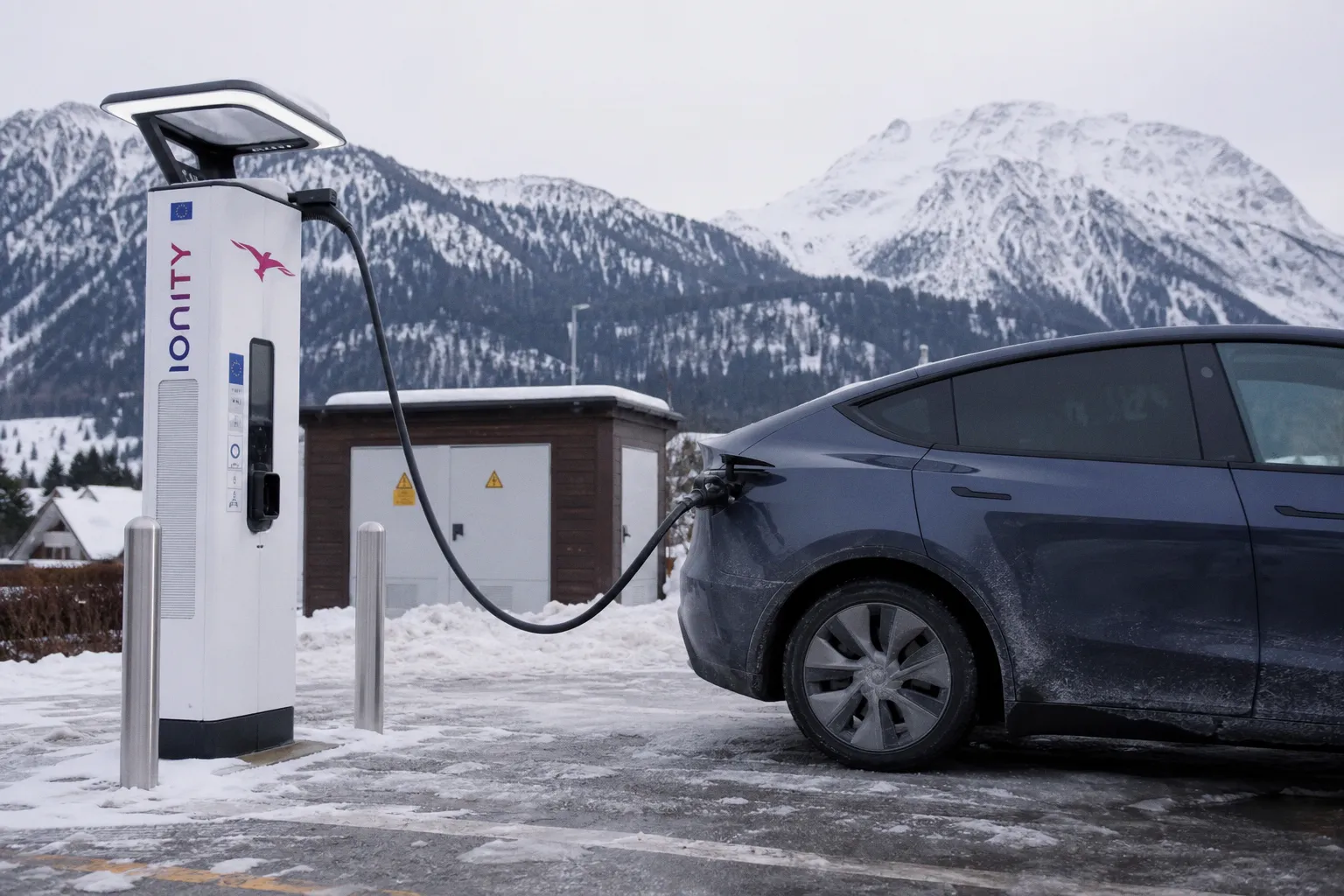
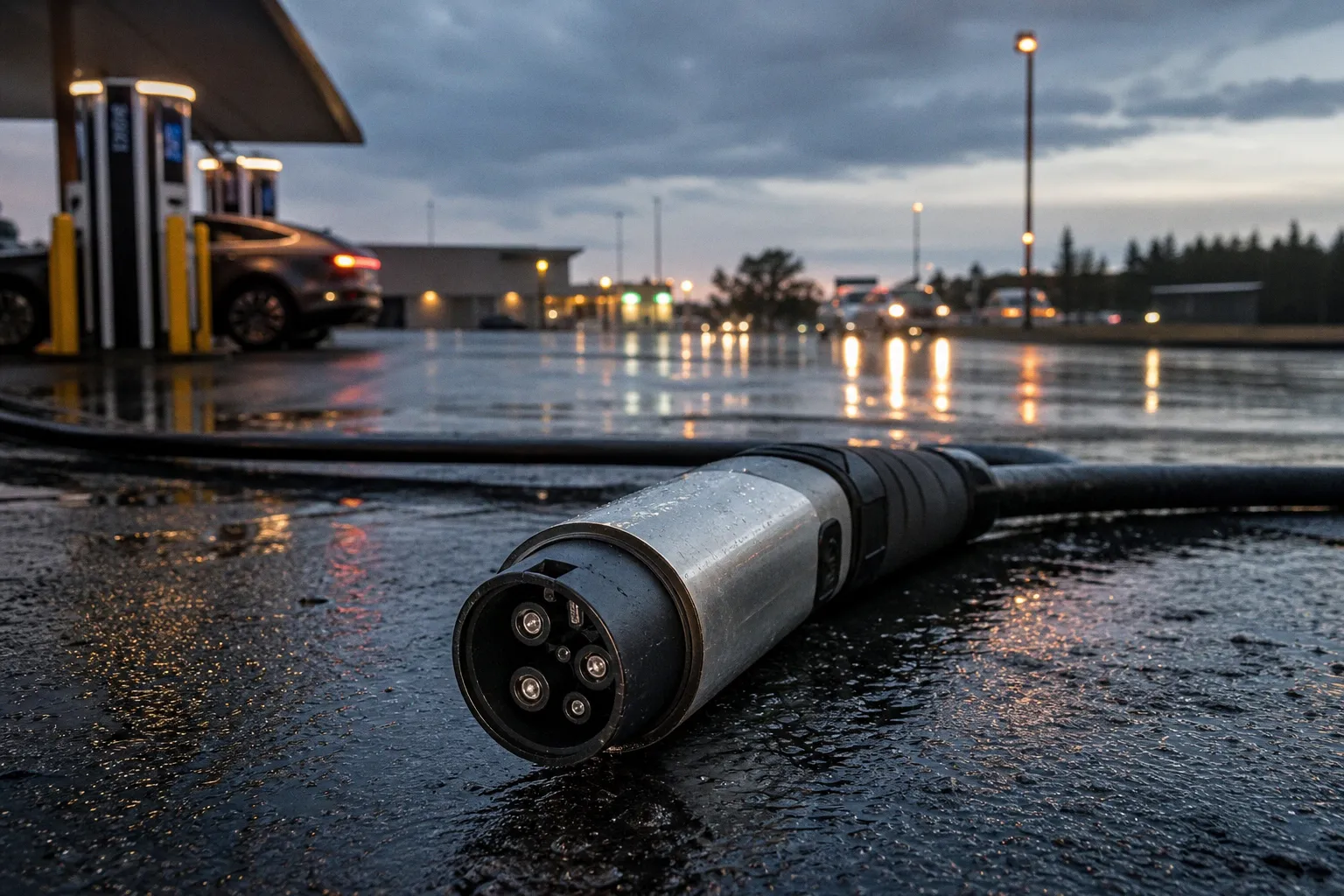
That last point is where many clean-looking range comparisons get dirty. The longest range electric cars are only truly long-legged if they can also recover miles quickly and reliably. A car that reaches the charger with 6% remaining is impressive. A car that then sits through a handshake failure at a 350-kW dispenser is a very expensive sculpture.
The physics nobody in the showroom wants to linger on
The biggest enemy of highway EV range is not battery chemistry. It is air.
Air seems harmless until you try to shove a two-ton vehicle through it at freeway speed for three hours. Then it becomes a wall with a subscription plan. The drag coefficient, usually written as Cd, tells only part of the story; frontal area matters too. Still, a slippery shape gives an EV a head start that no amount of marketing glitter can fake.
Top-tier long-range EVs tend to live in the 0.19 to 0.23 Cd neighborhood. That is not an accident. The Lucid Air Grand Touring, for example, has been one of the standout production EVs for EPA-estimated range, helped by an exceptionally low drag coefficient of 0.197 and a platform built around efficiency rather than just battery mass. That does not mean every Lucid driver will see a 500-mile highway day at 75 mph with the climate system working and traffic doing traffic things. It does mean the car begins with unusually good aerodynamic math.
The difference between a slippery sedan and a blunt SUV is not academic. It shows up in how quickly the estimated range drops once the cruise control locks in. Tall crossovers can carry large packs, but they also carry more frontal area. At city speeds, that penalty hides. On the highway, it walks into the room and puts its boots on the table.
Here is the simplified version of what matters most once you leave town:
| Factor | Why it matters at highway speed | What I see on the road |
|---|---|---|
| Aerodynamic drag | Drag rises sharply as speed increases | The range hit becomes obvious above roughly 70 mph |
| Battery capacity | More usable energy can extend distance | Helps, but cannot fully rescue an inefficient body or tires |
| Powertrain efficiency | Motors, inverters, and software decide how much energy becomes motion | Efficient platforms feel “larger” than their battery spec |
| Thermal management | Battery and cabin temperature control consume energy | Heat, cold, and sustained speed all expose weak calibration |
| Tires and wheels | Rolling resistance and wheel size affect consumption | Big wheels often look better parked than they perform at 75 mph |
| Regenerative braking | Recovers energy during deceleration | Much less useful on steady highway runs than in city traffic |
The uncomfortable bit is that buyers often focus on the easiest number to understand: electric vehicle battery capacity. Kilowatt-hours feel concrete. Bigger must be better. Sometimes it is. But a large battery in a draggy vehicle can deliver worse highway efficiency than a smaller pack in a cleaner, better-optimized car.
That is not a knock on battery size. Capacity matters. It just is not a personality.
What separated the strongest highway performers
The cars that impressed me most did not all use the same trick. Some leaned on large packs. Some leaned on aerodynamics. The best combined both and then avoided tripping over their own thermal software.
In broad terms, the strongest real-world highway performers shared four traits.
1. They were slippery before they were powerful
Horsepower gets the headline. Drag coefficient gets you to the next charger with less swearing.
A low-slung sedan with careful underbody work, active aero, and restrained tire choices can hold efficiency in a way a tall performance SUV simply cannot. The difference may look minor at 45 mph. At 75 mph, it becomes the main event.
This is why vehicles chasing the best electric car range tend to look a certain way: smooth noses, tapered rooflines, flush handles, covered underbodies, and wheels designed as much for airflow as curb appeal. The design language can get a little bar-of-soap, but soap moves through air better than a brick.
2. Their thermal management stayed quiet and competent
A battery pack has a comfort zone. Keep it there and the car feels calm. Let it drift too hot or too cold and the vehicle spends energy fixing the problem. In extreme ambient conditions, thermal management can become a meaningful load at highway speed.
The better systems do this work without drama. They precondition intelligently before DC fast charging. They avoid letting the pack cook during sustained high-load driving. They keep charging speeds stable for longer. The bad ones announce themselves through reduced power, erratic charging, or that sour little moment when the car promises a fast stop and then settles into a rate that belongs on a hotel Level 2 unit.
This is where battery tech and software become inseparable. High-performance NMC cells commonly sit around 250 to 300 Wh/kg in energy density, but chemistry alone does not decide road behavior. Cooling architecture, pack layout, inverter efficiency, and control logic all get a vote.
3. They did not rely on regenerative braking to save them
Regenerative braking is wonderful in city driving. It makes stop-and-go traffic less wasteful and gives EVs that pleasant one-pedal rhythm many owners quickly refuse to give up.
On the interstate, regen is not the hero. There simply are not enough braking events during steady cruising to recover meaningful energy. If your route is 180 miles of freeway with gentle elevation changes, the car spends most of its time fighting air and rolling resistance, not clawing energy back from deceleration.
That is why a model that feels wonderfully efficient around town can look ordinary in a highway EV range test. City efficiency and highway efficiency are cousins, not twins.
4. Their charge curve did not collapse too early
Strictly speaking, charging speed is not range. Practically speaking, it is how range works on a trip.
Most lithium-ion EVs are happiest when DC fast charging in a typical 10% to 80% window. Push beyond 80% and charging usually slows sharply to protect the pack. Do that occasionally because the next charger is 160 miles away and the wind is acting up? Fine. Do it constantly and then leave the battery sitting at 100% for long periods? That is how you invite faster degradation.
Frequent DC fast charging and extended time at full state of charge can accelerate lithium-ion battery degradation. That matters because long-term range is not just what the car does new. It is what it still does after years of road trips, hot parking lots, winter preconditioning, software updates, and the occasional charger that makes you restart the session three times like you are negotiating with a vending machine.
A big EPA number gets you attention. A stable highway efficiency figure and a sane charge curve get you home.
Battery capacity is the blunt instrument. Efficiency is the scalpel.
There is a comforting simplicity to battery capacity. A 100-kWh pack sounds better than an 80-kWh pack. Often it is. But capacity is only the fuel tank, and EVs are not immune to waste just because the fuel is measured in kilowatt-hours instead of gallons.
Two cars can carry similar usable energy and deliver very different highway results. One may run a highly efficient motor setup, low rolling-resistance tires, tight aero, and conservative thermal behavior. Another may haul more mass, wider rubber, a taller body, and performance tuning that prioritizes shove over thrift. Both may look competitive on a spec sheet. On the road, one arrives with 18% battery and the other arrives with 8% and a driver silently calculating whether the next station has working stalls.
That is the real difference between advertised range and usable range.
The EPA number is a starting point. For highway travel, I mentally subtract depending on speed, temperature, vehicle shape, and tires. A 10% to 20% drop from EPA range at 70 to 75 mph is not unusual. Cold weather, heavy rain, roof cargo, big wheels, and aggressive driving can make the haircut nastier.
If you are shopping for the longest range electric cars, this is the hierarchy I would use before believing any brochure:
- Look at highway efficiency, not just combined EPA range. A car can post a strong overall number while being less impressive at sustained speed.
- Favor low drag when road trips matter. Sedans and streamlined liftbacks usually have an advantage over taller SUVs.
- Treat huge wheels with suspicion. They may improve stance, but they often hurt range and ride quality.
- Ask how the car charges from 10% to 80%. Peak charging speed is less useful than how long the vehicle holds a strong rate.
- Consider battery care habits. If your routine requires daily DC fast charging or sitting at 100%, long-term range retention may suffer.
- Do not ignore software. Updates can change routing, preconditioning, efficiency displays, and charging behavior, though exact effects are often proprietary and not consistently disclosed.
The battery is expensive, heavy, and central. But in highway driving, efficiency is what keeps that battery from feeling smaller than it is.
The cars that tend to win this fight
I am careful with winner labels because trims, tires, weather, and software can bend results. A dual-motor performance trim on 21-inch wheels is not the same animal as the efficiency trim on smaller aero wheels, even if the badge on the back looks familiar.
Still, the pattern is clear. The best highway range performers usually come from one of three camps.
The aero-first luxury sedans
This is where a car like the Lucid Air Grand Touring makes sense. It pairs a large battery with obsessively low drag and a powertrain designed for efficiency. That combination is why it sits among the most credible answers when people ask about the best electric car range in a production EV.
The catch is obvious: price. These cars are not budget appliances. They are engineering showcases with monthly payments that can induce shallow breathing. But from a battery-and-aero standpoint, the formula works.
The efficiency-tuned mainstream EVs
Some mainstream EVs do not have monster packs, but they make disciplined use of what they carry. They tend to have sensible tire packages, conservative thermal behavior, and software that understands route planning. These cars may not win a maximum-distance bragging contest, but they can be excellent road-trip machines because they combine good efficiency with predictable charging.
Predictable matters. I will take a slightly shorter-legged EV that routes cleanly and charges consistently over a theoretical range champion that turns every stop into a diagnostic session.
The big-pack SUVs that brute-force distance
Large electric SUVs and trucks can travel far because they carry enormous batteries. But the physics bill is steep. More mass, more frontal area, and often larger tires mean highway consumption can be ugly. These vehicles can still be right for buyers who need space, towing capability, or winter confidence. Just do not confuse a large battery with high efficiency.
When a big SUV posts a good highway distance, I respect the engineering. I also look at how many kilowatt-hours it burned to get there. There is a difference between endurance and elegance.
The hidden range killers: weather, tires, and charger behavior
The range number you get in April on dry pavement is not the range number you get in January with slush collecting in the wheel wells. EVs do not like extremes. Batteries prefer moderation, which is rude because road trips rarely consult the pack’s emotional needs.
Cold weather adds cabin-heating demand and can reduce battery performance if the pack is not properly conditioned. Hot weather can force more cooling. Rain increases rolling resistance. Wind can be brutal, especially a headwind that turns a flat highway into an invisible grade.
Then there are tires. EV-specific tires are not marketing fluff when done properly. They need to handle mass, torque, noise suppression, and rolling resistance. Swap to stickier performance rubber and you may love the steering response. Your range estimate may file a complaint.
Finally, charging behavior can distort how range feels. If a car has a strong 10% to 80% session, you can run shorter legs and keep moving. If it charges slowly, you start nursing the battery deeper, charging higher, and generally turning the trip into a spreadsheet with cupholders.
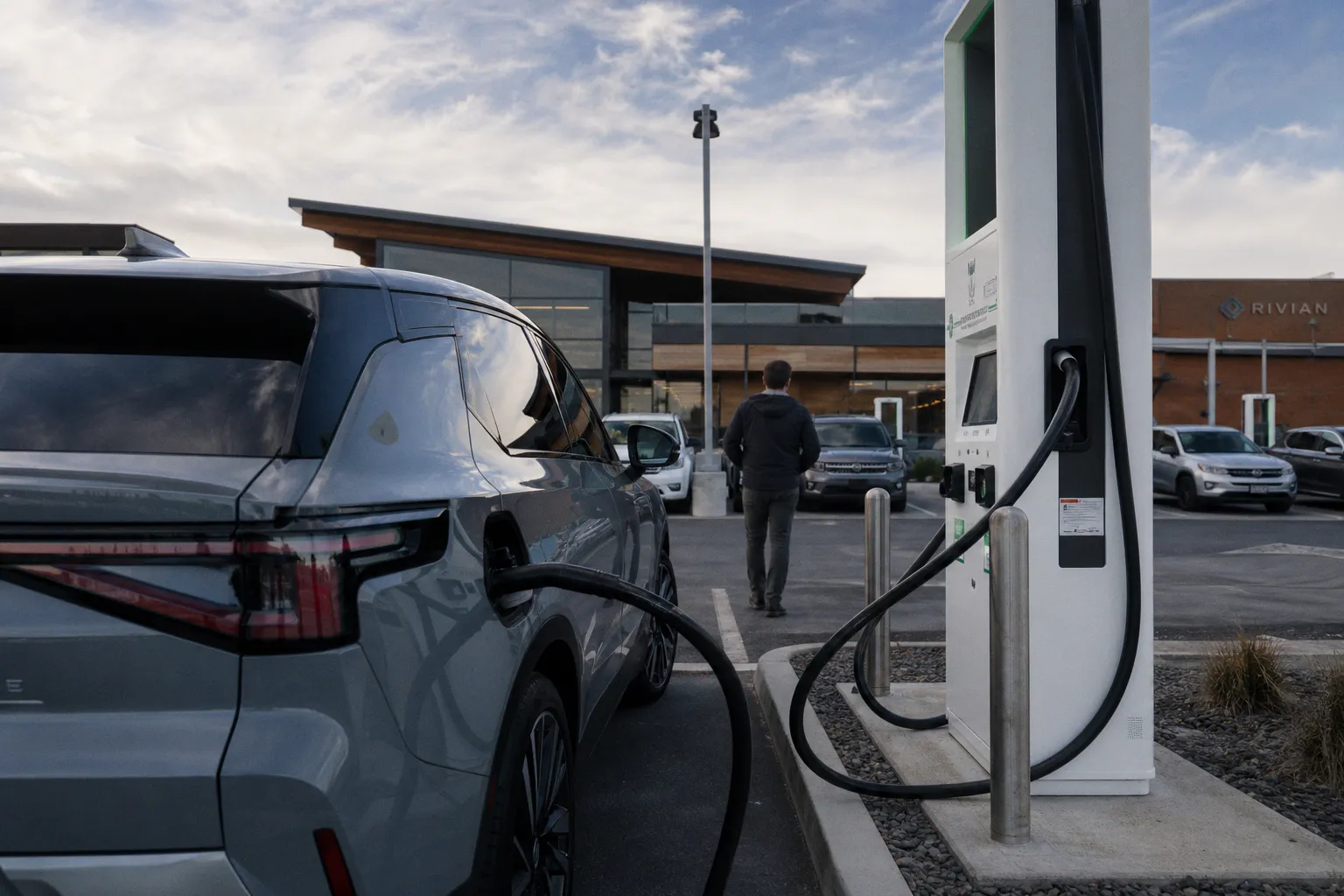
A good EV road trip rhythm usually looks like this: arrive low, charge fast through the fat part of the curve, leave before the taper becomes painful. Sitting from 80% to 100% on a DC fast charger is sometimes necessary, but it is rarely pleasant and often poor station etiquette. The car slows down, the session drags, and the person waiting behind you begins reconsidering society.
What solid-state batteries will and will not fix
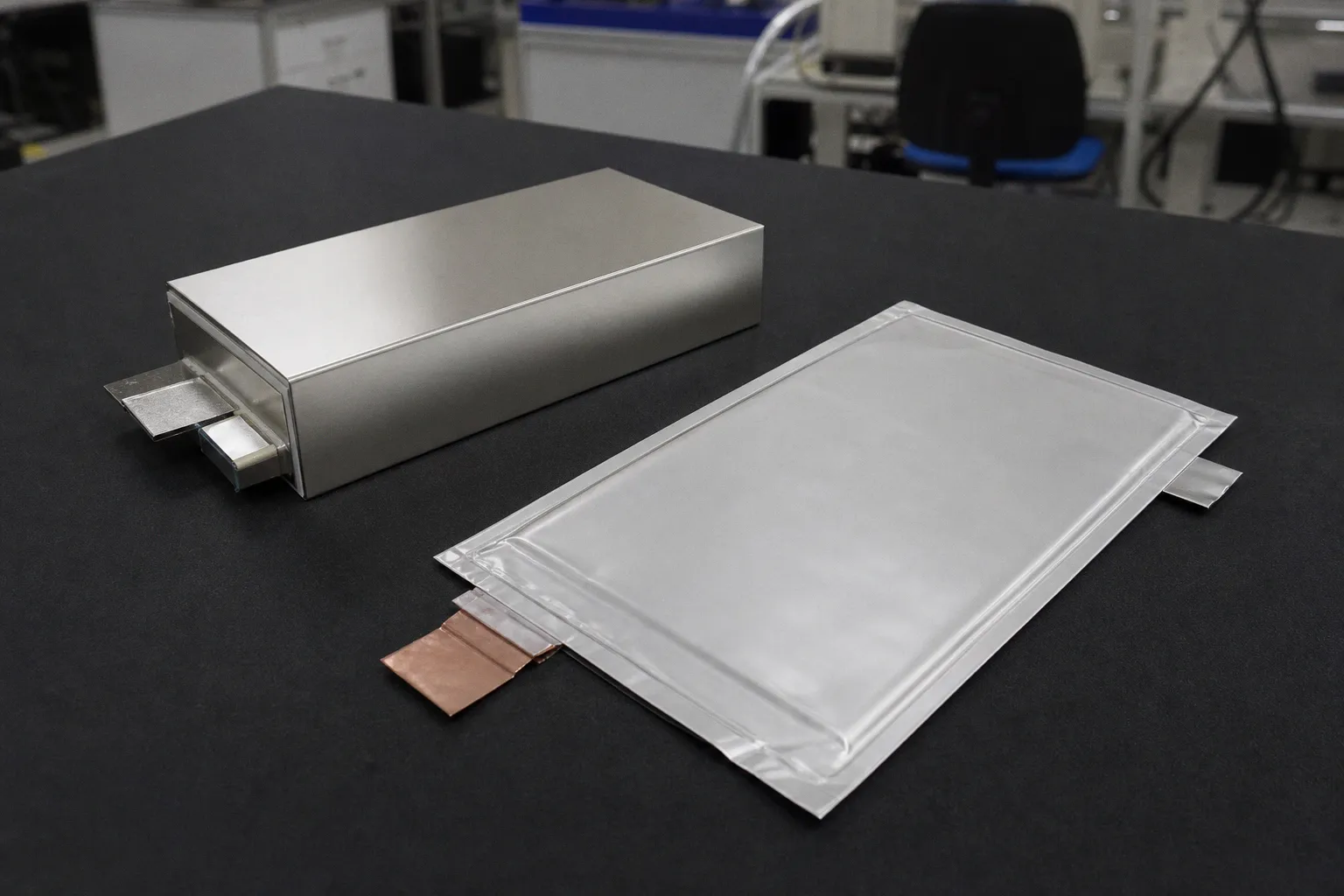
Solid-state batteries get treated like the coming rapture in EV conversations. Higher energy density, potentially faster charging, improved safety characteristics — all of it sounds excellent. The expected commercialization window for early solid-state battery introductions is generally discussed around the late 2020s, but mass-market reality is not here yet.
So no, you cannot walk into a normal dealership today and buy a mainstream solid-state EV that makes lithium-ion highway compromises disappear.
Even when solid-state packs arrive, they will not repeal aerodynamics. A draggy vehicle will still be draggy. A tall SUV will still push more air than a sleek sedan. Thermal management will still matter. Tires will still matter. Software will still matter. The highway will continue being a brutally honest test bench.
What better batteries can do is expand the margin. More energy density could mean more usable range without simply adding weight. Better charging durability could make fast-charging-heavy ownership less punishing. But the range champion of the future will still be the vehicle that treats energy like something worth conserving, not something to be shoveled into a heavy brick and spent at 75 mph.
My verdict: buy the highway car, not the headline number
If your EV life is mostly commuting, school runs, and home charging, almost any modern long-range EV can feel abundant. Plug in overnight, wake up with enough charge, repeat. Easy.
But if you are shopping for the best electric car range because you actually drive long highway distances, the decision gets sharper. You want a car that holds efficiency at speed, manages battery temperature intelligently, charges strongly in the 10% to 80% window, and does not require you to build your life around ideal weather and cooperative dispensers.
The winners are not always the flashiest. They are the cars that lose fewer miles to the air, waste less energy heating and cooling themselves, and avoid the charge curve cliff long enough to make a 20-minute stop feel like a stop rather than a sentence.
EPA range still belongs in the conversation. Just do not let it chair the meeting. The road has its own accounting system, and it is not impressed by badges, launch videos, or optimistic dashboard estimates. It counts kilowatt-hours, wind, temperature, drag, and time spent staring at a fast charger while the car and the cabinet try to complete a handshake.
That is the range test that matters. Not the one printed on the sticker. The one that decides whether you make the next stop comfortably — or arrive with 3%, a hot battery, and a very personal opinion about infrastructure.