Electric car range specs: what to buy and the caveats
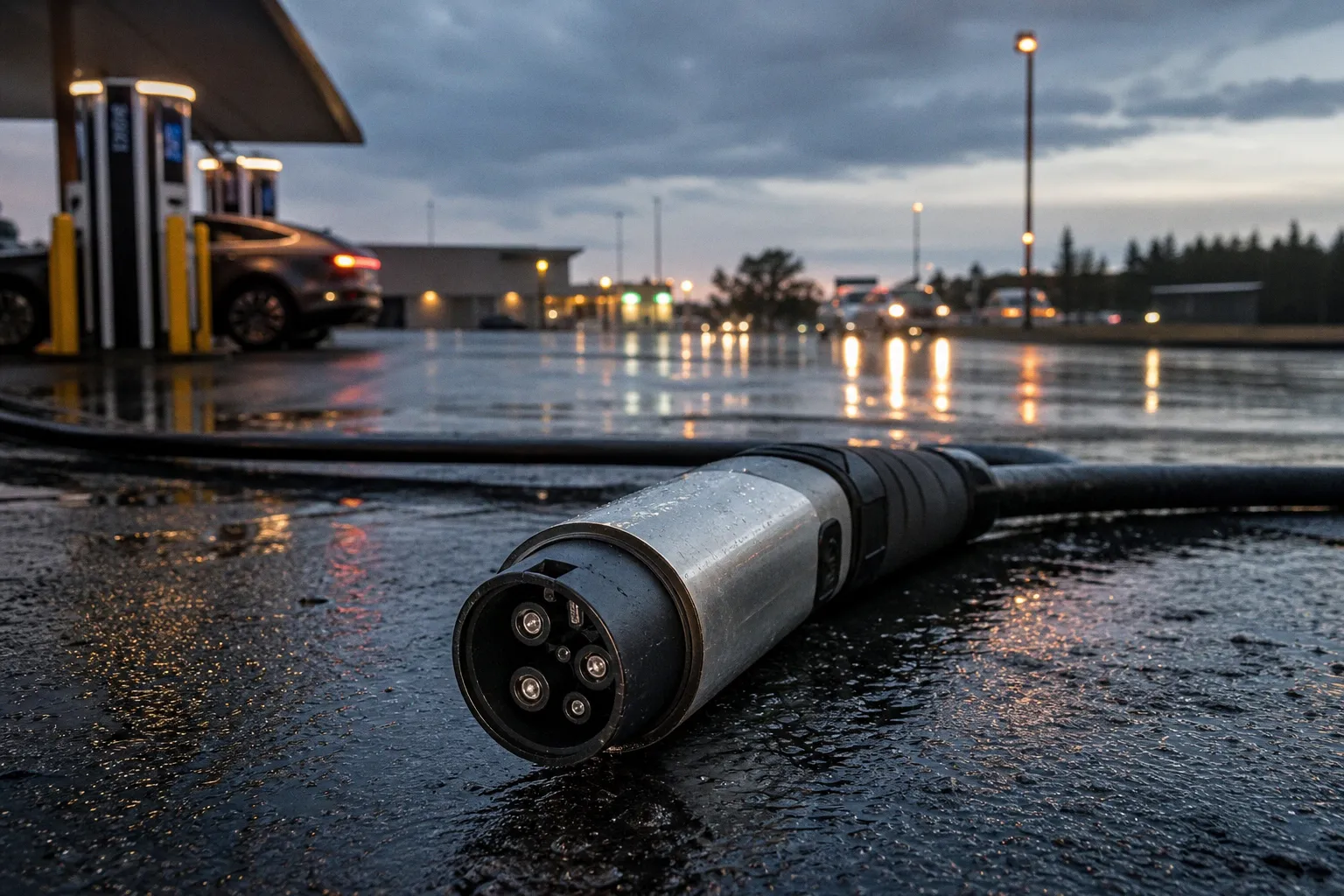
At 20°F, with cabin heat running and interstate traffic moving at the usual illegal-but-normal pace, it can turn into a calculation involving wind, elevation, battery preconditioning, and whether the charger at the other end is actually alive.
That is the central problem with electric car range specs: the sticker number is not a lie, exactly. It is a laboratory result with a narrow job. It does not promise 70-mph highway range in a February crosswind, a roof box on the car, four passengers aboard, and a charger that makes you detour six miles off the interstate.
The best electric cars now advertise more than 500 EPA miles. The Lucid Air Grand Touring is rated at 512 miles from a 112-kWh battery pack; Chevrolet’s Silverado EV can reach 493 EPA miles, but gets there with a gargantuan 200-kWh pack. Those figures are impressive. They are also a poor shortcut for deciding which EV will feel relaxed on your actual routes.
Real-world EV range is about the interaction between efficiency, usable battery capacity, temperature, speed, and charging behavior—not the largest number printed on a dealer window.
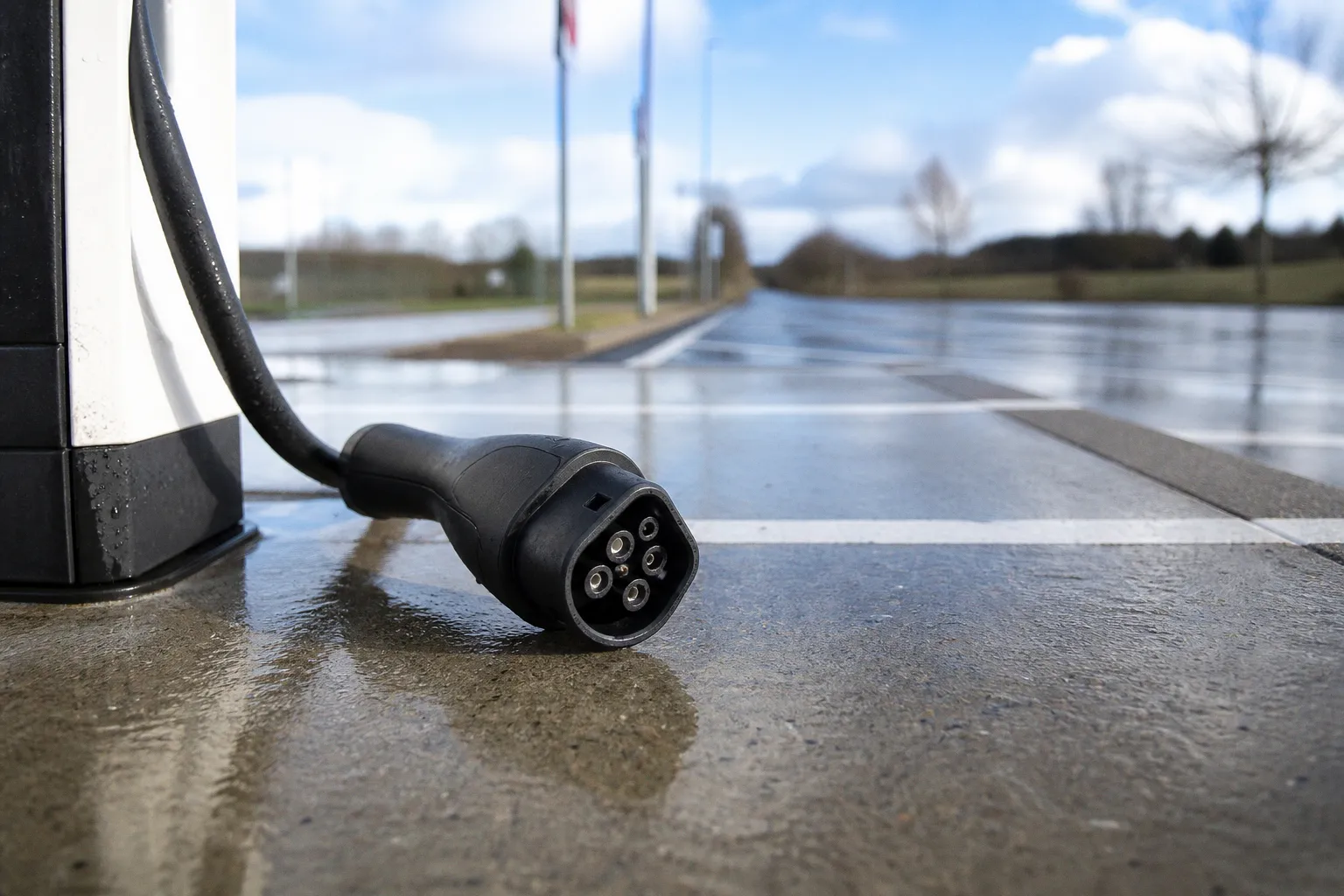
A range rating is useful as a comparison tool. Treating it as a travel guarantee is how people arrive at a bricked dispenser with 7% left and a suddenly vivid imagination.
The gap between the official number and your highway day
Official range ratings are measured under standardized procedures. That gives buyers a common benchmark, which is necessary. Without it, every automaker would simply publish whatever number makes the launch presentation sparkle hardest.
But standardization does not erase physics. Drag rises sharply at highway speeds. Cabin heating pulls energy from the same battery that turns the wheels. Cold batteries accept less regenerative braking and need energy to warm themselves. A steep climb can eat range with astonishing speed; the descent may give some back, but never all of it.
A 2026 analysis of 1,678 EVs found modeled real-world range averaging 10.5% below EPA ratings in the United States. European figures were further from their official claims, averaging 24.6% below WLTP ratings. Those are broad averages, not a prediction for one particular car on one particular day. Still, they neatly explain why the first long EV road trip often feels like discovering the fine print after the contract has been signed.
For a buyer, the more useful question is not, “Does this car have 300 miles of range?” It is:
- How many miles does it cover at 75 mph in the temperatures I actually drive in?
- How much of that range am I willing to use before stopping?
- How quickly does it recover miles at a reliable fast-charging site?
- Does the route I travel have enough charging redundancy that one handshake failure does not wreck the day?
That last point is where glossy range comparisons often become useless. A vehicle with 270 honest highway miles and a flat, dependable charge curve can be easier to travel in than a nominal 330-mile model that drops into a charge curve cliff at 55% state of charge and needs another stop because its route spacing is awkward.
The usable range is smaller than the battery math suggests
Most experienced EV drivers do not plan a highway day from 100% to 0%. Starting at 100% is reasonable when a trip begins, assuming the manufacturer permits it for occasional use. But fast-charging stops are usually more efficient between roughly 10% and 80%, where the pack can take power rapidly. Above 80%, charging often slows dramatically as the car protects the cells.
That means a car’s practical rapid-travel window is often closer to 70% of its rated battery capacity between stops. Add cold weather or sustained 75-mph running, and the comfortable buffer gets thinner.
This is not an argument against EVs. It is an argument against buying one from a range badge alone.
EPA vs. WLTP vs. CLTC: the alphabet soup has consequences
Not every range number is built on the same testing cycle. This sounds obvious until a buyer sees a foreign-market review, a social-media post, or a manufacturer announcement and assumes that one “mile” of rated range means the same thing everywhere.
It does not.
| Rating system | Where it is used | What the number tends to mean | Buyer takeaway |
|---|---|---|---|
| EPA | United States | Generally the most conservative major official rating and usually the closest to ordinary driving | The best starting point for U.S. comparisons, though not a winter-highway promise |
| WLTP | Europe and many other markets | More optimistic than EPA, with testing that often produces a higher official result | Expect real-world range to sit meaningfully below the headline figure |
| CLTC | China | The most optimistic of the three for most direct comparisons | Do not compare it directly with an EPA number without a substantial downward adjustment |
CLTC ratings can run roughly 15% to 20% higher than WLTP figures and about 30% to 35% higher than EPA ratings for broadly comparable vehicles. So when a model is announced with a spectacular CLTC claim, do not mentally convert it one-for-one into U.S. road-trip range. That is how a 400-mile-looking car becomes a 260-to-300-mile reality before weather gets involved.
EPA range is the least misleading headline figure in the business, but that is a low bar. It is still a mixed-cycle test, not a certification of what happens when you hold 78 mph for three hours through cold rain.
This matters especially when comparing cars with similar sticker range but very different battery sizes. The Lucid’s 512 EPA miles from 112 kWh points to exceptional efficiency. The Silverado EV’s 493-mile maximum rating reflects a very different strategy: huge usable energy, huge mass, and truck-shaped aerodynamics that need that energy. Neither approach is inherently wrong. But the ownership experience differs.
The Lucid asks less energy from the grid per mile. The Silverado can brute-force distance and may be a better fit for a buyer who truly needs truck capability, but its charging sessions and home-energy demands belong in the decision, not in a footnote.
Battery capacity tells you how much fuel is in the tank. Efficiency tells you how fast the car drinks it. The window sticker usually prefers to talk about neither.
Winter is where the range brochure starts sweating
The most punishing condition for electric car range is not necessarily a mountain pass or an overloaded cargo area. It is often an ordinary cold morning.
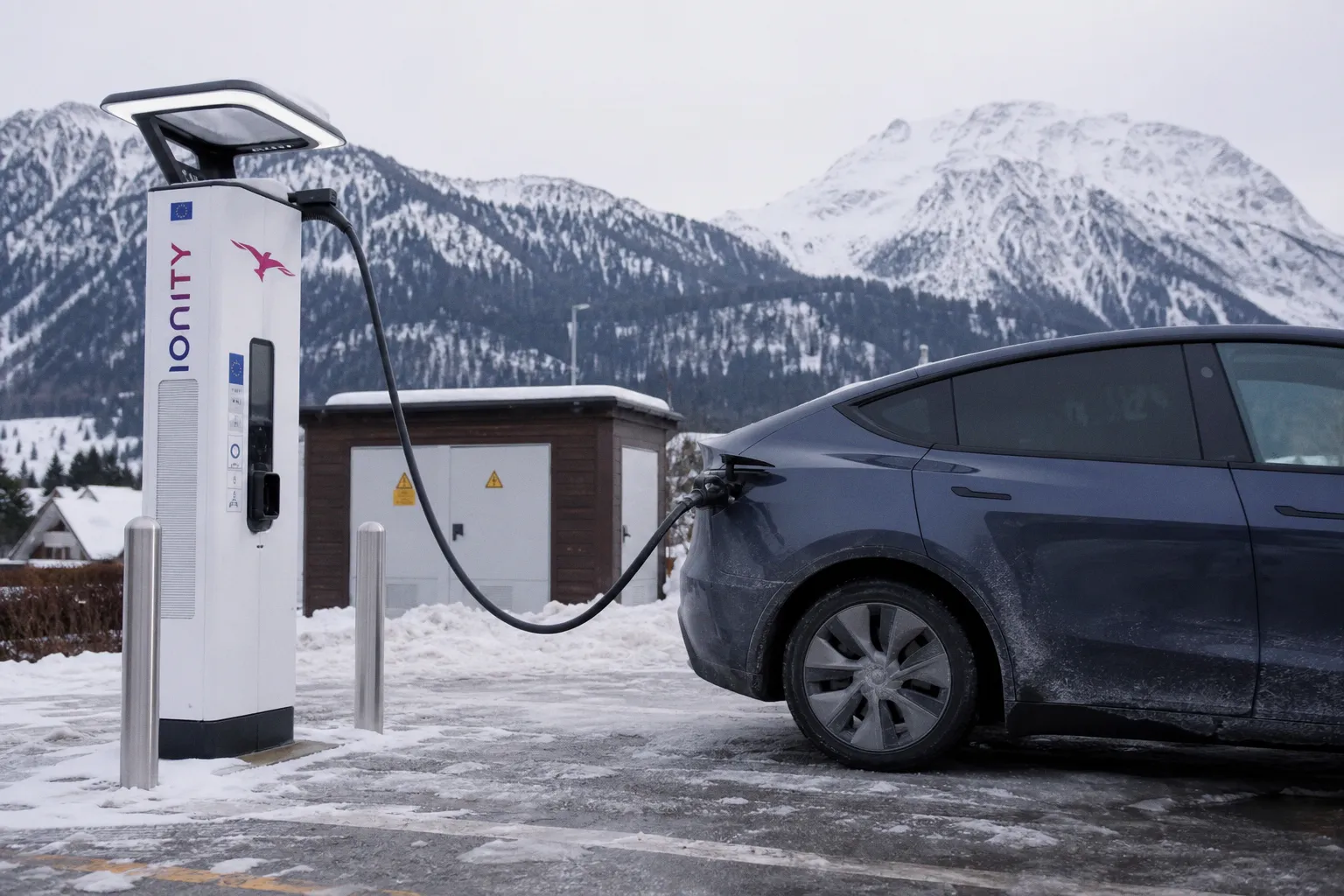
AAA testing in 2026 found that at 20°F, EV driving range fell by an average of 39% compared with 75°F conditions. Energy efficiency dropped by 35.6%. Those are not small adjustments. They are the difference between making a round trip without thinking and scheduling a charging stop around a grocery store, a school pickup, and the one public charger in town that has been “temporarily unavailable” since October.
Cold weather hits an EV from several directions at once:
1. The battery pack becomes less efficient. Lithium-ion cells do not enjoy the cold. Available power and energy access decline until the pack is warmed.
2. The cabin needs heat. In a gasoline car, engine waste heat does much of that job. An EV has to manufacture heat, often directly from the battery.
3. Regenerative braking can be limited. A cold or nearly full battery cannot accept recovered energy as freely, so the car wastes more momentum through conventional friction braking.
4. Fast charging slows without preconditioning. Arrive at a high-power charger with a cold pack and the advertised 150- or 250-kW peak can remain theoretical. The dispenser is not necessarily broken; the battery simply is not ready.
5. Winter roads add drag. Slush, rain, dense cold air, winter tires, and roof-mounted gear all take their share.
A conventional resistive PTC heater can consume roughly 4 to 8 kW from the pack. That is a brutal accessory load when the car is moving slowly or sitting in traffic. A heat pump changes the equation. Near 30°F, heat-pump-equipped EVs can retain roughly 8% to 10% more range than comparable vehicles using resistance heat.
That does not make a heat pump a magic winter button. It makes it a feature I would strongly favor for anyone who lives where freezing temperatures are routine. In cold climates, I would take a car with slightly less EPA range, a competent heat pump, reliable battery preconditioning, and a well-sorted thermal-management system over a bigger-rated pack that treats January as an engineering surprise.
Hot weather also costs range, just less dramatically
Air conditioning is not free, and neither is battery cooling. At 95°F, AAA found an average range loss of 8.5% compared with the 75°F baseline, with efficiency down 10.4%.
That is noticeable, but it is not winter’s 39% hammer. In very hot regions, the bigger concern is not just daily range—it is how the battery thermal system holds up through repeated fast charging, long highway runs, and years of heat soak. A pack that is aggressively cooled and intelligently managed may be less exciting in a showroom spec sheet than an oversized pack, but it is usually the better long-term companion.
What to buy if range is the priority
The lazy answer is “buy the EV with the highest EPA number you can afford.” That can work, but it is not the best rule.
I would divide range-focused buyers into four groups.
The home-charging commuter
If you drive 30 to 60 miles most days and can plug in at home, you do not need a 400-mile EV to live comfortably. A realistic 220 to 280 EPA miles is often abundant, provided the vehicle has decent cold-weather behavior and you are not regularly towing or driving long interstate legs.
The relevant feature list is short:
- A heat pump if winters are cold.
- Battery preconditioning before DC charging.
- A reputable thermal-management system.
- Enough home charging power to replenish your ordinary daily use overnight.
- A battery warranty with clear capacity-retention terms.
Buy efficiency and thermal competence before you buy maximum pack size. Hauling excess battery around every day is expensive, heavy, and often unnecessary.
The frequent highway traveler
For drivers who routinely cover 250-mile-plus days, rated range matters—but charging speed and route compatibility matter just as much.
Look for a car that can sustain high DC charging power beyond the first few minutes. Peak charging numbers are marketing bait; the curve is the meal. A vehicle that briefly touches 250 kW and then falls off a cliff may be slower on a trip than one that holds a lower but steadier rate.
I also care about navigation-linked preconditioning. The car should warm or cool the pack automatically when a DC fast charger is set as the destination. Without it, a winter charging stop can become a ritual of watching a 350-kW charger deliver 48 kW while the dashboard insists everything is normal.
For this buyer, a genuine 300-plus EPA-mile vehicle is sensible. But I would still test the charging behavior, not just read the headline. The range number gets you to the station. The charge curve decides when you leave it.
The cold-climate driver
This is the buyer most likely to be burned by an insufficient range buffer. If you regularly start mornings below freezing, do not purchase an EV based on summer test drives or the dealer’s cheerful claim that “all EVs lose some range.”
Yes, all EVs lose range in cold weather. No, they do not lose it equally.
For a winter-heavy household, I would target more EPA range than the daily commute appears to require, prioritize a heat pump, and avoid building a schedule that depends on arriving at a charger with single-digit battery percentage. The 39% AAA average is not a universal sentence for every EV, but it is a useful reminder that winter does not negotiate.
A 300-mile EPA-rated EV can behave like something much closer to a 180-mile tool on a cold, fast highway run. Your route, speed, wind, elevation, and vehicle all determine the final number. The point is to buy enough margin that the number does not become an emergency.
The towing or heavy-load owner
Towing is where range optimism goes to die in public. Aerodynamic drag from a trailer can be savage, and many public charging sites were built without any thought for a pickup plus trailer trying to reach a stall. Even a large battery does not fix bad charger geometry or a station full of cars.
If towing is central to your ownership plan, buy the EV for its charging network access, charging-station layout, and real towing reports—not just its official unloaded range. A 200-kWh pack can provide meaningful reserve, but it cannot repeal drag.
Battery degradation: slower than the panic, less tidy than the brochure
Buyers often ask whether an EV battery will be “good” after eight years. The honest answer is that it depends on chemistry, cooling, charging patterns, climate, and plain manufacturing variation. There is no universal depreciation schedule hiding in the glovebox.
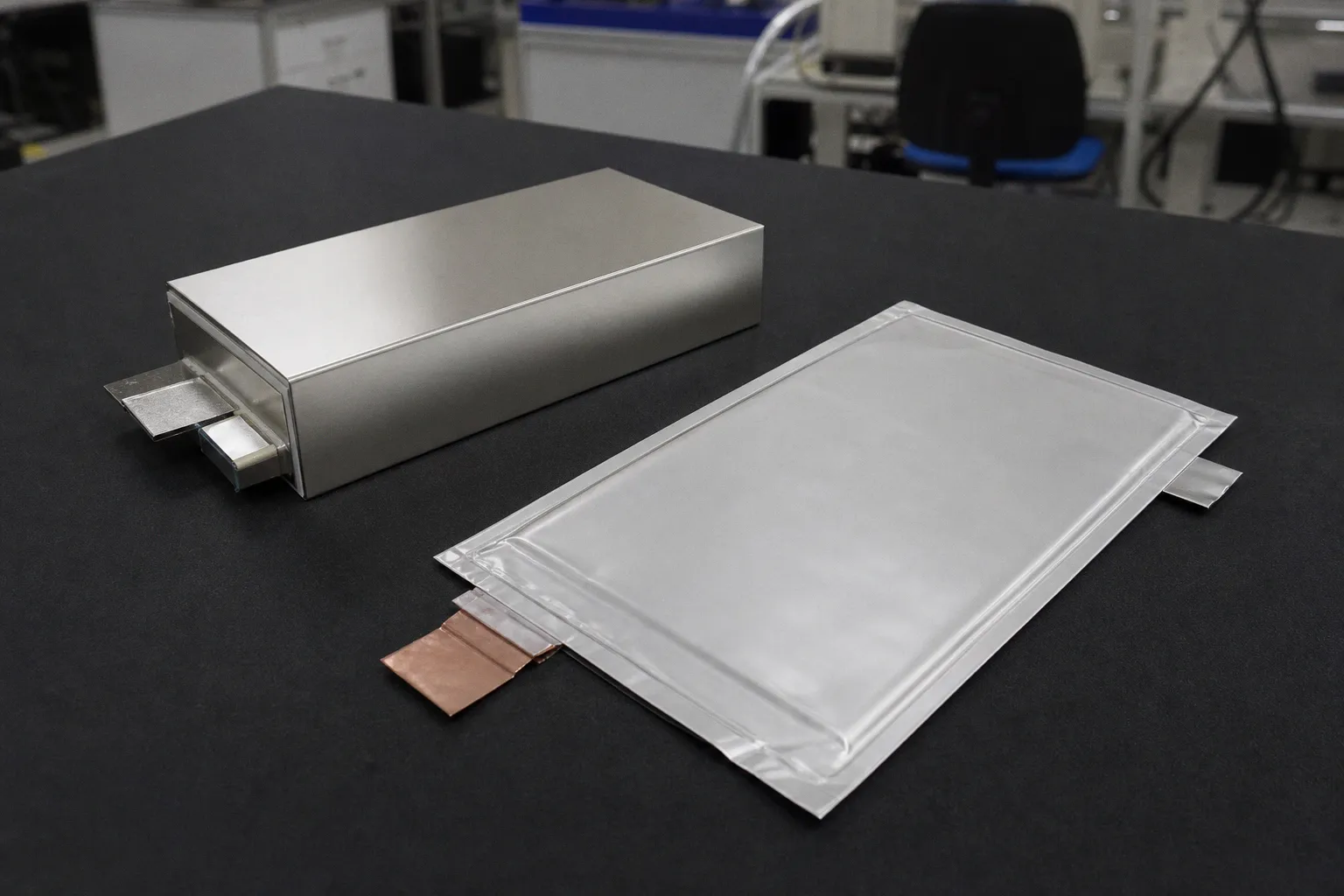
The reassuring part is that modern packs are not typically falling apart at the rate early skeptics predicted. Geotab’s 2025 analysis of more than 22,700 EVs put average battery degradation at 2.3% per year. But averages hide the behavior that matters: degradation is usually not linear. Capacity loss is often steeper in the first one to three years, then settles into a slower decline.
Frequent high-power DC fast charging can add wear. The same analysis found annual degradation as high as 3.0% for vehicles relying heavily on charging above 100 kW, compared with about 1.5% for lower-power charging patterns. That does not mean every road-trip driver is cooking their battery. It means that heat, high state of charge, and repeated high-rate charging are real stresses, which is precisely why good thermal management and charging controls matter.
A practical ownership routine is less dramatic than the online arguments:
- Use home or workplace AC charging for ordinary life when available.
- Save repeated high-power DC charging for travel and situations that genuinely need it.
- Do not leave the battery parked near 100% for long periods unless the manufacturer explicitly advises otherwise for your use case.
- Use scheduled charging and preconditioning when the car supports it.
- Treat sudden, major range loss as a diagnostic issue—not as a personality trait of EV ownership.
The battery warranty provides a floor, not a promise that your pack will feel new at the end of the term. U.S. federal and state requirements generally mandate at least eight years or 100,000 miles of coverage to 70% capacity retention. California raises that to 10 years or 150,000 miles.
Seventy percent is not a luxury experience. A vehicle that began life with 300 miles of useful range and now has roughly 210 before weather, speed, and load are considered may still be functional, but it has become a different car. That is why starting with adequate range—and not barely enough—is the better long-game purchase.
The verdict: buy margin, not mythology
Electric car range specs are valuable, but only if you use them for what they are: a standardized comparison, not a sworn statement about your next winter interstate run.
For most U.S. buyers, EPA range is the cleanest starting point. Then subtract for the way you drive. If you live in a cold state, take winter seriously and favor a heat pump. If you road-trip often, study charging curves, battery preconditioning, and network access with the same intensity you give the headline range figure. If you mostly charge at home and commute modest distances, do not pay for a massive battery you will carry around as dead weight.
My blunt rule from too many charging stops in places with one diner, no cell signal, and a dispenser that has decided it needs a software update: buy the EV that leaves you a buffer after the bad assumptions stack up.
Not the one that looks heroic in perfect weather. The one that still gets you home when the temperature drops, the road speeds up, and the charger ahead is having a bad day.