Best EV charging stations: What our performance tests revealed
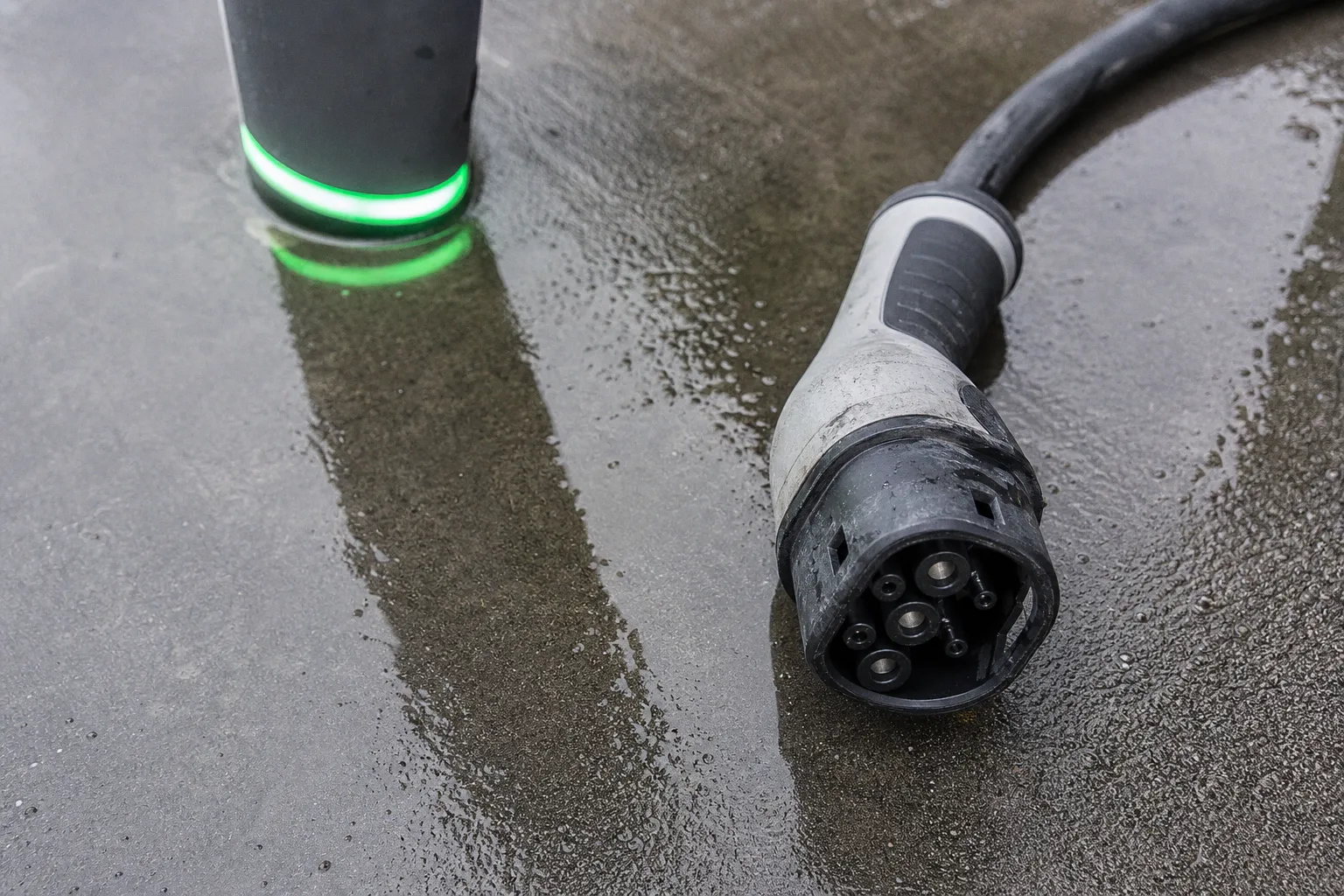
The box is mounted, the app has a glossy map, the LEDs glow heroically. The car still charges at the same rate it would have with cheaper hardware.
That is the irritating truth behind the search for the best EV charging stations. A home EVSE is not a magic fuel pump. It is a controlled, safety-critical switch that delivers AC power, while the car’s onboard charger decides how much of that AC it can turn into battery energy. On the road, the same mismatch appears in a different costume: a 350-kW dispenser, a vehicle that peaks far below that figure, and a charge curve cliff that turns the last 20% into a long, cold wait beside a vending machine.
I have learned to distrust both the giant number on the charger and the giant number on the station canopy. The useful question is narrower: will this hardware reliably deliver the power your vehicle can use, with the connector you need, on an electrical circuit that makes sense?
The onboard-charger bottleneck: why more kW is not always faster
For home charging, the vehicle is the boss. The wall-mounted unit—technically EV supply equipment, or EVSE—does not convert AC from the grid into DC for the battery. Your car’s onboard charger does that work. The EVSE communicates the safe available current, closes the circuit, and watches for faults. It is a very important piece of equipment. It is not a tiny power plant.
That distinction wrecks plenty of top-rated home EV charger comparisons.
A Level 2 unit may be rated anywhere from roughly 2.9 kW to 19.2 kW. But if your EV’s onboard AC charger tops out at 7.2 kW, attaching it to an 11.5-kW or 19.2-kW wall unit will not suddenly make it drink faster. The car will take its 7.2 kW, politely ignore the rest of the charger’s potential, and leave you with a more expensive box.
In broad real-world terms, Level 1 charging from a standard 120-volt outlet adds about 2 to 5 miles of range per hour. Level 2 charging on 240 volts commonly adds 10 to 30 miles per hour. That is a wide span because the vehicle, circuit, temperature, battery condition, and equipment setting all get a vote.
Here is the level 2 charger comparison that actually matters:
| Question | Lower-output Level 2 setup | Higher-output Level 2 setup |
|---|---|---|
| Typical use case | Overnight recovery for moderate daily driving | Faster overnight turnaround, multiple EVs, high-mileage use |
| What limits charging speed | Often the EV’s onboard charger or a lower-amperage circuit | Frequently the vehicle’s onboard charger, even if the EVSE is capable of more |
| Electrical demand | Can fit more easily into an existing panel and circuit plan | May require a larger dedicated circuit or panel work |
| Value proposition | Usually strong when the car sits overnight | Strong only when the vehicle and household electrical service can exploit it |
| Common buyer mistake | Assuming it is “too slow” because the box is smaller | Paying for unused capacity and calling it future-proofing |
A 240-volt Level 2 charger is the sensible baseline for most EV-owning households, not because every driver needs the maximum amperage, but because it makes overnight charging routine instead of a daily logistics problem. Plug in after dinner, wake up with a meaningful refill, move on with your life. That is the whole point.
The right buying sequence is less glamorous than scrolling product rankings:
1. Find your vehicle’s maximum AC charging rate. This is the ceiling for home Level 2 charging. Do not confuse it with the vehicle’s DC fast-charging peak, which is a separate number altogether.
2. Calculate your nightly energy need. A commuter replacing a modest daily drive does not need the same setup as a household with two EVs, a long freeway commute, and late-night arrivals.
3. Match the EVSE output to the car and circuit. A higher-rated unit can be useful for a future vehicle or shared household load, but “can be useful” is not the same as “must buy.”
4. Have an electrician assess the panel before ordering hardware. The panel does not care that the charger was discounted online.
5. Choose a permanently installed unit when reliability and capacity matter. A plug-in unit can be excellent where the receptacle and circuit are correctly specified, but it adds one more physical connection to heat up, loosen, or become the weak link.
The best home charger is not the one with the largest kW printed on its shell. It is the one that delivers your car’s actual limit, every night, without turning the electrical panel into a hostage negotiation.
California is pushing the market in the right direction for newer vehicles: model-year 2026 EVs sold there must have an onboard charger rated at least 5.76 kW, or enough capability to fully charge the traction battery within the applicable requirement. That is a California rule, not a nationwide mandate, but it reflects a simple reality. Home charging needs to keep pace with ordinary driving, not merely prove that electrons are technically arriving.
Decoding connector standards: J1772, NACS, and the J3400 transition
Connector compatibility is where otherwise intelligent buyers get ambushed by transition-era nonsense.
For North American AC charging, you will encounter J1772 and NACS. For public DC fast charging, the picture gets messier: CCS, CHAdeMO on a shrinking number of legacy-equipped vehicles, and NACS. The NACS connector is now formalized through SAE J3400, whose September 2024 revision covers physical, electrical, functional, safety, and performance requirements for AC and DC conductive charging through the coupler.
That standardization is useful. It does not mean every plug now works everywhere.
A NACS-equipped vehicle may need an adapter for some CCS stations. A CCS-equipped vehicle may need an approved adapter for certain NACS access arrangements. Even when the connector physically fits, the session can still die in the software layer: account authorization, station firmware, vehicle firmware, network permissions, or a good old-fashioned handshake failure. I have watched drivers stand beside a perfectly intact dispenser while two expensive computers refuse to acknowledge each other. The cable was not the problem. The ecosystem was.
Before selecting a home unit, verify these four things against your exact vehicle model year—not the badge, not a forum post from last spring:
- The vehicle inlet: J1772, NACS, or another format determines what plugs in directly.
- The home EVSE connector: A native-match cable is cleaner than making an adapter part of every bedtime routine.
- The adapter’s approved use case: Not every adapter is valid for every vehicle, station network, or charging mode.
- Cable reach and parking geometry: A cable that barely reaches the port will eventually get dragged, twisted, and cursed at in freezing rain. Measure the garage, including where the car actually ends up after a tired driver parks it.
The “universal” charger category deserves particular skepticism. A unit with multiple connector options can be practical in a mixed household, especially during the J1772-to-NACS transition. But universal does not mean frictionless. It means you have traded one compatibility decision at purchase for a few smaller compatibility decisions over the life of the equipment.
For public charging, the connector is only the first gate. The fastest public charging networks are not necessarily the ones with the highest advertised dispenser rating. A station rated at up to 350 or 500 kW cannot force a vehicle to accept that power. And even a vehicle capable of a strong peak may only hold it briefly before battery temperature, state of charge, or power-sharing logic brings the rate down.
A healthy DC fast-charge session is not a single number. It is a curve. The peak makes the brochure. The sustained portion gets you back on the highway.
Efficiency and reliability: labels tell you something, not everything
A charging station has two jobs: deliver energy safely when asked, and consume as little nonsense power as possible when nobody is asking.
Safety comes first. Look for equipment that is safety-listed by a Nationally Recognized Testing Laboratory. Relevant North American standards include ANSI/UL 2594 for EV supply equipment and ANSI/UL 2202 for DC charging equipment. That language is dry because electrical fires, shock hazards, and failed protective functions are not the place for lifestyle branding.
If a bargain charger arrives with vague certification language, an unfamiliar logo, or documentation that seems to have been translated through three layers of wishful thinking, walk away. The cheapest EVSE becomes very expensive the moment an electrician refuses to install it—or worse, agrees to.
ENERGY STAR certification is also worth treating as a useful filter. Certified Level 1 and Level 2 chargers use 40% less energy in standby mode than standard models, according to ENERGY STAR. That matters more than it sounds like it should. Home EVSE sits energized for years, often waiting 22 hours a day to do a few hours of actual work.
For DC fast chargers up to 65 kW, ENERGY STAR says certified equipment averages at least 93% active-charging efficiency. Again, that is not a promise that every unit with the label is faster, more reliable, or easier to use. It is an efficiency benchmark—not an absolution.
The phrase “EV charging station reliability” gets abused because it is hard to measure honestly. Home hardware reliability includes the contactor, thermal management, cable strain relief, weather sealing, firmware stability, Wi-Fi behavior, and whether the unit still behaves after the router changes its password. Public charging reliability adds payment systems, network back-end uptime, power cabinets, damaged cables, blocked stalls, load sharing, and the particular talent some operators have for bricking a dispenser with an app update.
Federal NEVI-funded charging ports are required to achieve average annual uptime above 97%. That is a meaningful standard, because a port must be online and available or in use, while successfully delivering the required minimum power. But it applies to ports covered by NEVI requirements. It is not proof that every public station, every network, or every lonely highway site has suddenly become dependable.
A 97% uptime figure also sounds more comforting than it feels when your battery is low. Three percent downtime at the wrong station is not an abstract statistic. It is a rerouted evening.
Public charging does not fail like gasoline pumps fail. A broken gas pump is obvious. A broken fast charger often lets you get through three screens, authorize a payment, lock the cable, and then collapses in silence.
Smart features are useful until they become another point of failure
The best smart EV chargers do not need to entertain you. They need to solve a specific problem without making charging dependent on a cloud service that has chosen 1:14 a.m. for maintenance.
The smart functions that earn their place are practical:
- Scheduled charging can shift home charging into lower-cost time-of-use periods where your utility tariff rewards overnight consumption.
- Adjustable current settings help an EVSE fit within a constrained circuit or manage household electrical load.
- Load management can be valuable for homes with limited service capacity, particularly when two EVs, electric heating, induction cooking, and other large loads start stacking up.
- Session history can help track actual household energy use, though your utility meter remains the adult in the room.
- Remote status alerts are useful when they tell you that charging stopped. They are less useful when they bury the warning beneath badges, leaderboards, and push notifications about carbon savings.
Do not buy a “smart” charger on the assumption that it automatically supports solar integration, vehicle-to-home power, vehicle-to-grid operation, or utility demand response. Those capabilities depend on a specific combination of vehicle, bidirectional-capable equipment, electrical design, utility rules, and software permissions. A colorful app cannot bridge a missing hardware capability.
The basic test is brutally simple: if the internet goes out, can the charger still charge the car? For many homes, the answer should be yes. Cloud features should be a layer on top of dependable local operation, not the oxygen supply.
I also prefer a charger that makes its state obvious at the unit itself. A clear status light and a direct fault indication beat an app that requires sign-in, a firmware update, and a Bluetooth ritual before admitting the session stopped 40 minutes ago.
Installation is where good hardware meets the real house
Every home-charging recommendation that ignores installation is selling half a story.
Most homes have 240-volt service available, but that does not mean there is spare capacity for the exact charger you want. An electrician has to consider the panel rating, existing loads, dedicated circuit size, wire run, breaker selection, local code, permit requirements, and the physical route from panel to parking space. A detached garage can turn a straightforward installation into trenching, subpanel work, and a bill with enough commas to ruin the hardware deal.
The cleanest installation is usually one with a short run, a logical mounting location, and a charger sized around the household’s actual needs. The worst is a high-amperage unit chosen from a ranking list before anyone opens the panel door.
There are three installation realities buyers should confront early:
1. A panel upgrade may not be necessary—but neither is it rare in older or heavily electrified homes. The answer depends on a load calculation, not optimism.
2. Hardwiring is often the sturdier long-term route. It can support higher-output configurations and eliminates dependence on a receptacle, though the correct choice is site-specific.
3. The cheapest rate is often the rate you schedule, not the rate your charger can theoretically deliver. If your utility has time-of-use pricing, the best financial setup may be a moderate-output charger that reliably fills the car during inexpensive overnight hours.
For renters, condo residents, and drivers without dedicated parking, the home-charger conversation changes completely. A perfect wall unit is worthless without authority to install it and a durable plan for access, billing, and cable management. Public charging can cover the gap, but it turns refueling into a recurring errand—and errands are exactly what home charging is supposed to erase.
The verdict: buy the charging station that removes friction, not the one that creates a spec-sheet victory
There is no defensible single winner among the best EV charging stations without transparent, model-by-model testing of delivered power, thermal behavior, long-term uptime, app stability, installation quality, and support. A product ranking that declares one universal champion while skipping those variables is mostly retail theater.
But the buying decision itself is not mysterious.
For most single-EV households, a safety-listed, ENERGY STAR-certified Level 2 charger matched to the car’s onboard AC limit and installed on a properly sized circuit is the right answer. Native connector compatibility is preferable. Adjustable current is useful. Scheduling is useful if your electricity rate makes it useful. A dependable local charging function matters more than a clever app.
For public charging, treat the rated kW number as a ceiling, not a promise. Verify connector access, adapter approval, station count, and the network’s real behavior on your actual routes. Then leave margin in the battery, because the charger that strands you is rarely the one you planned to use.
The industry keeps selling charging as effortless. It is getting better, but anyone who has sat in a dark parking lot watching a session fail at 8% knows better. Good hardware does not make those problems disappear. It does something more valuable: it keeps most of them out of your driveway.
FAQ
Why is my EV charging slower than the charger's advertised power rating?
Do I need a high-amperage charger to future-proof my home?
Should I choose a plug-in or hardwired EV charger?
What should I look for to ensure a charger is safe?
Does a higher kW rating on a public fast charger guarantee faster charging?
Related articles
 Charging & InfrastructureBuy the Safest CCS to NACS Adapters for Non-Tesla EVs
 Charging & InfrastructureCompare EV charging stations cost for garage vs driveway
 Charging & InfrastructureChargePoint EV charging stations compared by speed and cost
 Thailand locks in $4.1 billion in EV supply chain investment as auto sector pivots