BMW i3 Electric Car Range: Battery Generations Compared
The chassis, motor layout, 96-cell pack architecture, and 50 kW DC ceiling remained broadly familiar. The usable battery capacity did not.
That distinction matters on the used market. An i3 badge tells you almost nothing about trip capability. A 2014 60 Ah BEV and a 2021 120 Ah BEV are separated by 19.1 kWh of usable energy and 72 EPA-rated electric miles. They are different tools.
The REx complicates the comparison. It does not mechanically drive the rear wheels. Its small gasoline engine runs a generator, which supplies energy to the high-voltage system when battery state of charge falls low enough. It extends trip range. It does not turn the i3 into a conventional hybrid.
The battery progression: 60 Ah, 94 Ah, and 120 Ah
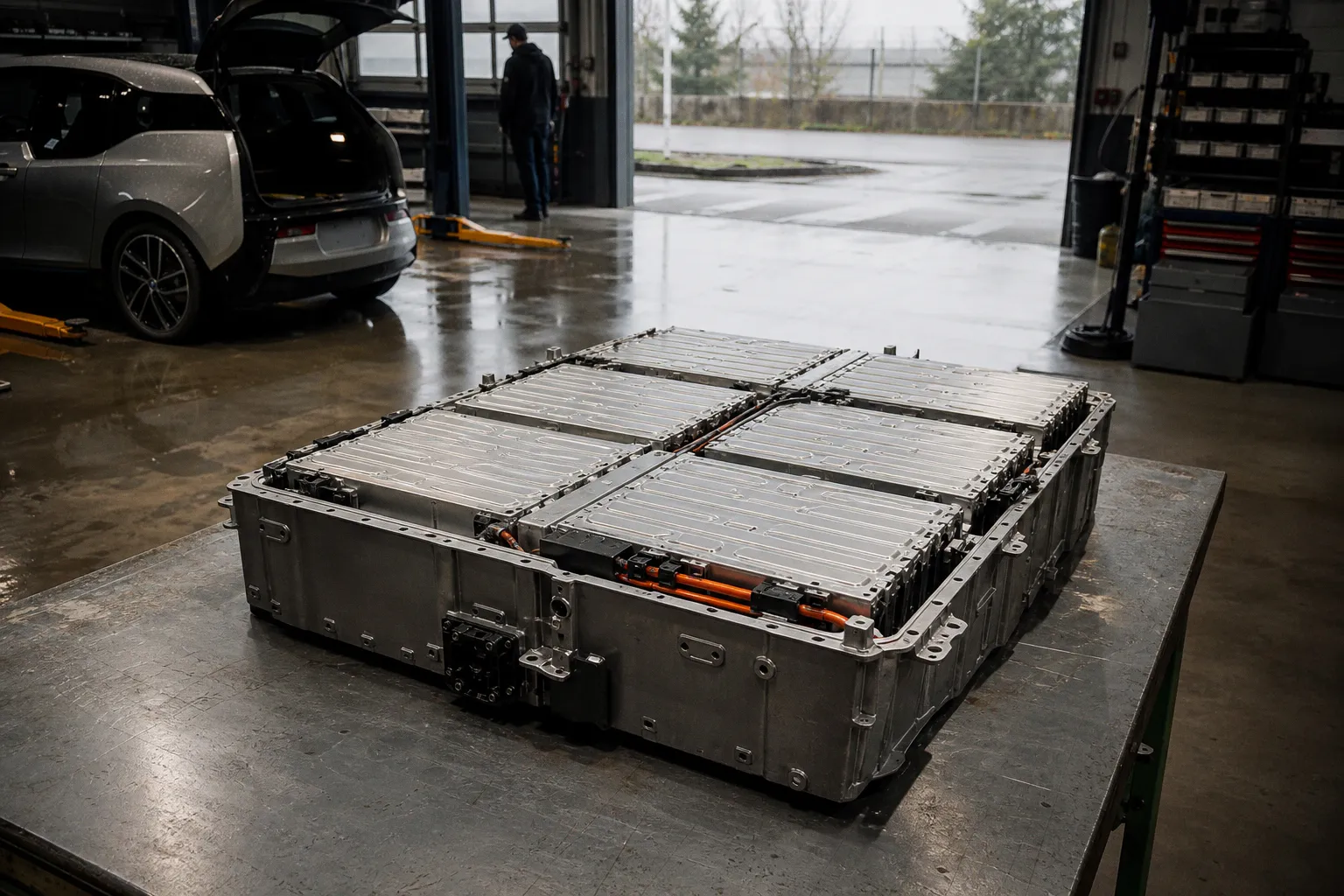
BMW increased cell capacity three times without changing the pack’s basic electrical layout. Every i3 pack uses 96 prismatic cells in an 8-module arrangement: 12 cells per module, connected as a 96s1p string. There is no parallel cell group to spread current load. Capacity gains came from higher-capacity individual cells.
The usable-capacity figure is the number that determines practical range. Gross capacity includes the buffer reserved by the battery management system at the top and bottom of the state-of-charge window.
| Battery generation | Model years | Gross capacity | Usable capacity | EPA BEV range | EPA REx electric range | EPA REx total range |
|---|---|---|---|---|---|---|
| 60 Ah | 2013–2016 production | 22 kWh | 18.8 kWh | 81 miles | 72 miles | 150 miles |
| 94 Ah | 2017–2018 model years | 33 kWh | 27.2 kWh | 114 miles | 97 miles | 180 miles |
| 120 Ah | 2019–2021 U.S. model years | 42.2 kWh | 37.9 kWh | 153 miles | 126 miles | 200 miles |
The 60 Ah to 94 Ah change added 8.4 kWh usable. That is a 45 percent increase in available battery energy. EPA range rose 33 miles for the BEV.
The 94 Ah to 120 Ah change added a further 10.7 kWh usable. EPA range rose another 39 miles. This is the generation that changes the i3 from a short-distance urban EV into a usable regional car, provided the charging route is reliable.
The 120 Ah pack is not merely a modest facelift feature. It contains just over twice the usable energy of the original 60 Ah pack: 37.9 kWh versus 18.8 kWh.
The i3’s range story is not about model year. It is about usable kilowatt-hours.
What the cell chemistry changed—and what it did not
The 60 Ah and 94 Ah packs use Samsung SDI prismatic cells with NCM 333 chemistry. This designation refers to a nickel-cobalt-manganese cathode with broadly equal proportions of those three metals.
The 120 Ah pack moved to NCM 622. It has a higher nickel proportion and lower cobalt proportion than NCM 333. In practical pack terms, the shift enabled more energy storage within the same physical battery envelope.
This is why the i3 could retain its unusual underfloor pack structure while moving from 22 kWh gross capacity to 42.2 kWh. BMW did not create extra space under the passenger cell. Cell-level energy density did the work.
There are several conclusions that should not be drawn from this chemistry change.
First, NCM 622 does not automatically mean a 120 Ah pack will age faster or slower than an NCM 333 pack in a specific used car. Long-term degradation depends on calendar age, cumulative energy throughput, average state of charge, ambient temperature, charging behavior, and battery thermal control. A clean 60 Ah pack with conservative use can outperform a poorly treated newer pack in available capacity percentage.
Second, the original i3 was not a passively cooled early-EV design. All three battery generations use active liquid refrigerant cooling. That is material. Cell temperature affects internal resistance, charging acceptance, regenerative-braking availability, and long-term degradation. The i3’s thermal management system gives it a structural advantage over EVs that rely only on air cooling.
Third, chemistry does not solve the i3’s charging-rate limitation. The final 120 Ah pack stores substantially more energy, but DC fast charging still tops out at 50 kW. The car can accept more energy overall, but it does not operate like a current 150 kW or 250 kW EV on a highway charging stop.
EPA range is the stable comparison. Highway range is not a fixed number.
The EPA figures are the cleanest common reference because they are standardized across battery generations. They do not predict every owner’s result.
A highway-range number without speed, temperature, cabin heat use, tire type, elevation profile, and battery condition is not test data. It is a story. The i3 is particularly sensitive to these variables because the early packs are small. A few kilowatt-hours of heating load or a sustained high-speed segment represents a substantial percentage of the usable energy in an 18.8 kWh pack.
For an i3 buyer, the useful order of risk is straightforward:
1. The 60 Ah BEV has limited energy reserve. Its 81-mile EPA rating is not a planning number for a high-speed winter round trip. It is a compact local-use battery. The margin between a routine commute and a charging event is narrow.
2. The 94 Ah is the minimum sensible battery for mixed use. Its 27.2 kWh usable capacity gives it 8.4 kWh more buffer than the original car. That difference is larger than the entire usable battery capacity of some early plug-in hybrids.
3. The 120 Ah is the only version with a 150-mile EPA BEV rating. It is still not a long-range EV by current standards, but it has enough capacity to make public DC charging stops less frequent and less punitive.
4. Battery health matters more on the smaller packs. A loss of available energy has the same percentage effect on range across generations, but the operational effect is harsher when the starting point is 81 EPA miles.
5. The displayed estimate is not a laboratory measurement. The i3’s range estimator responds to recent efficiency. It should be treated as a dynamic forecast, not as a guarantee of remaining distance.
The most honest answer to “which BMW i3 has the best real-world range?” is the 120 Ah BEV or 120 Ah REx, depending on whether gasoline backup is acceptable. The ranking is not close because the capacity difference is not close.
The REx: useful generator, limited battery reserve
The BMW i3 REx is frequently described incorrectly. The gasoline engine does not send torque to the rear wheels. The electric motor remains the traction source. The engine’s role is to generate electricity and help sustain the battery once the state of charge reaches the trigger threshold.
That configuration changes trip planning, but it does not eliminate the limitations of the small battery.
The REx’s EPA figures show the progression clearly:
- The 60 Ah REx is rated for 72 electric miles and 150 miles total.
- The 94 Ah REx is rated for 97 electric miles and 180 miles total.
- The 120 Ah REx is rated for 126 electric miles and 200 miles total.
The REx versions have lower electric-only EPA ratings than comparable BEVs. The additional generator hardware adds mass. The useful trade is not better EV efficiency; it is the ability to continue beyond the battery’s electric range where charging access is poor.
This is most relevant with the 60 Ah model. The REx can make an early i3 viable for occasional longer routes, but it should not be confused with a high-speed, high-load range extender in the modern sense. On sustained motorway grades or high-speed driving, the vehicle’s energy demand can exceed what the generator can comfortably offset. The battery then continues to discharge until the load drops, speed falls, or charging becomes available.
That is a system constraint, not a fault. The i3 REx was designed around a modest generator and a battery-first operating strategy.
REx is a contingency system. It is not a substitute for battery capacity.
The U.S. fuel-tank limitation on early REx cars
U.S.-spec 2014–2016 60 Ah REx vehicles have a specific software restriction. The physical fuel tank holds 2.4 gallons, or 9 liters, but the accessible capacity was electronically limited to 1.9 gallons, or 7.2 liters.
The purpose was regulatory. California’s BEVx classification required gasoline range to be less than or equal to electric range. BMW therefore restricted the usable fuel volume on the early U.S. cars.
This does not apply as a blanket statement to every REx. It is an early 60 Ah U.S.-market detail. It should not be projected onto 94 Ah and 120 Ah cars.
Some owners use aftermarket coding to expose functions restricted in the U.S. software configuration. The best-known example is Hold State of Charge, or HSOC. European i3 REx models could manually activate the generator from 75 percent state of charge. U.S.-spec cars normally wait until roughly 6 percent state of charge before automatic REx operation begins.
HSOC can change route management materially. Starting the generator earlier allows the driver to retain battery reserve before a demanding grade or a high-speed section. It does not increase generator output. It does not increase battery capacity. It only changes when the system begins using fuel.
Software configuration increasingly determines how physical assets are used. The same broader pattern appears in sectors undergoing digital transformation, including the growth of property technology in South Africa: hardware is only part of the product; software rules increasingly shape access, workflow, and value.
Charging performance: the newer battery does not charge at a newer-EV rate
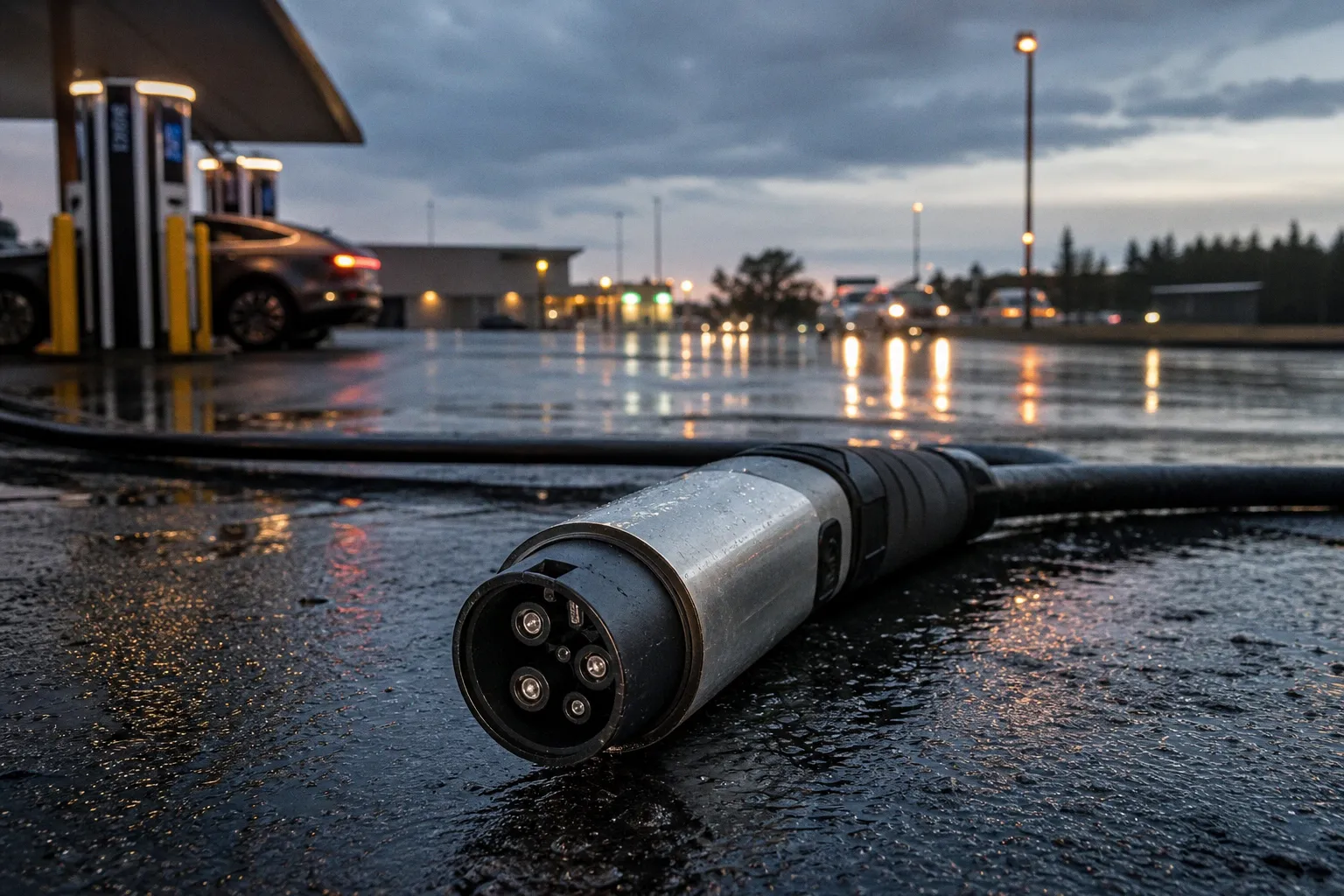
All BMW i3 battery generations support DC fast charging at up to 50 kW. The larger packs do not receive a higher stated DC peak charge rate.
This produces a counterintuitive result. The 120 Ah is far more useful between charges, but a charge from a low state of charge to 80 percent still involves moving substantially more energy than in a 60 Ah car. BMW’s stated 80 percent DC charging window is approximately 25 to 40 minutes depending on battery size.
The relevant distinction is AC charging:
| Charging mode | 60 Ah | 94 Ah | 120 Ah |
|---|---|---|---|
| Maximum AC charging | Up to 7.4 kW | Up to 11 kW | Up to 11 kW |
| Maximum DC charging | Up to 50 kW | Up to 50 kW | Up to 50 kW |
| Battery cooling | Active liquid refrigerant system | Active liquid refrigerant system | Active liquid refrigerant system |
For home charging, the 94 Ah and 120 Ah cars have the better AC ceiling. Whether an individual owner sees 11 kW depends on the supply equipment and local electrical service. The vehicle capability alone does not create an 11 kW charging session.
For public DC charging, 50 kW remains adequate for a vehicle with a 37.9 kWh usable pack. It is not competitive with current EV charging hardware, but the i3’s battery is also far smaller than the packs used in modern long-range crossovers. A reliable 50 kW unit is more valuable to an i3 driver than an unreliable 150 kW unit.
Thermal conditions still matter. Peak charge rate is not a promise that the car will hold that rate from plug-in to 80 percent. State of charge, pack temperature, charger output, and thermal throttling determine the actual charging curve. The i3’s active cooling is an advantage, but it cannot repeal the limits of a 50 kW-capable vehicle and an aging battery.
Which i3 battery is the rational used purchase?
The answer depends on operating radius, charging access, and tolerance for gasoline backup. The model-year badge is secondary.
Choose the 60 Ah only for constrained local driving
The 60 Ah i3 can still work as a city car with reliable home or workplace charging. Its 18.8 kWh usable pack is small by current EV standards, and the 81-mile EPA rating gives little margin for winter weather, motorway use, detours, or battery degradation.
The REx version adds resilience. The BEV version is cleaner mechanically and simpler operationally, but only makes sense when daily distance is consistently modest and charging is routine.
The 94 Ah is the price-to-capability midpoint
The 94 Ah battery is the practical floor for buyers who need more than urban use. Its 114-mile EPA BEV rating does not make it a long-distance EV, but the 27.2 kWh usable capacity reduces charging pressure substantially compared with the 60 Ah.
For many used buyers, the 94 Ah is the sensible compromise. It has the higher 11 kW AC charging capability and enough battery energy to make an occasional public charging stop less disruptive.
The 120 Ah is the correct choice for maximum electric usefulness
The 120 Ah car has 37.9 kWh usable capacity and a 153-mile EPA BEV rating. That is the version to buy if the objective is maximum BMW i3 electric car range without moving to another vehicle platform.
The REx remains relevant for drivers with irregular routes or weak charging infrastructure. But if home charging is available and daily driving fits comfortably inside the battery envelope, the 120 Ah BEV is the cleaner configuration. It removes the generator, fuel system, oil-service requirement, and REx-specific operating constraints.
Verdict
The BMW i3’s battery evolution is unusually easy to quantify. The 60 Ah provides 18.8 kWh usable. The 94 Ah provides 27.2 kWh. The 120 Ah provides 37.9 kWh. EPA BEV range rises in the same order: 81, 114, and 153 miles.
Buy the 60 Ah only as a low-mileage local EV or a cheap REx-backed utility car. The 94 Ah is viable for mixed driving. The 120 Ah is the clear technical winner, with twice the usable energy of the original pack and 72 more EPA electric miles.
The i3 remains constrained by its 50 kW DC charging ceiling. But battery capacity determines how often that limitation matters. On that metric, the 120 Ah is not marginally better. It is the version that makes the platform work.