What Is a Solid-State Battery and Is It Worth the Wait?

On those metrics, all-solid-state batteries are not ready for volume EVs in 2026.
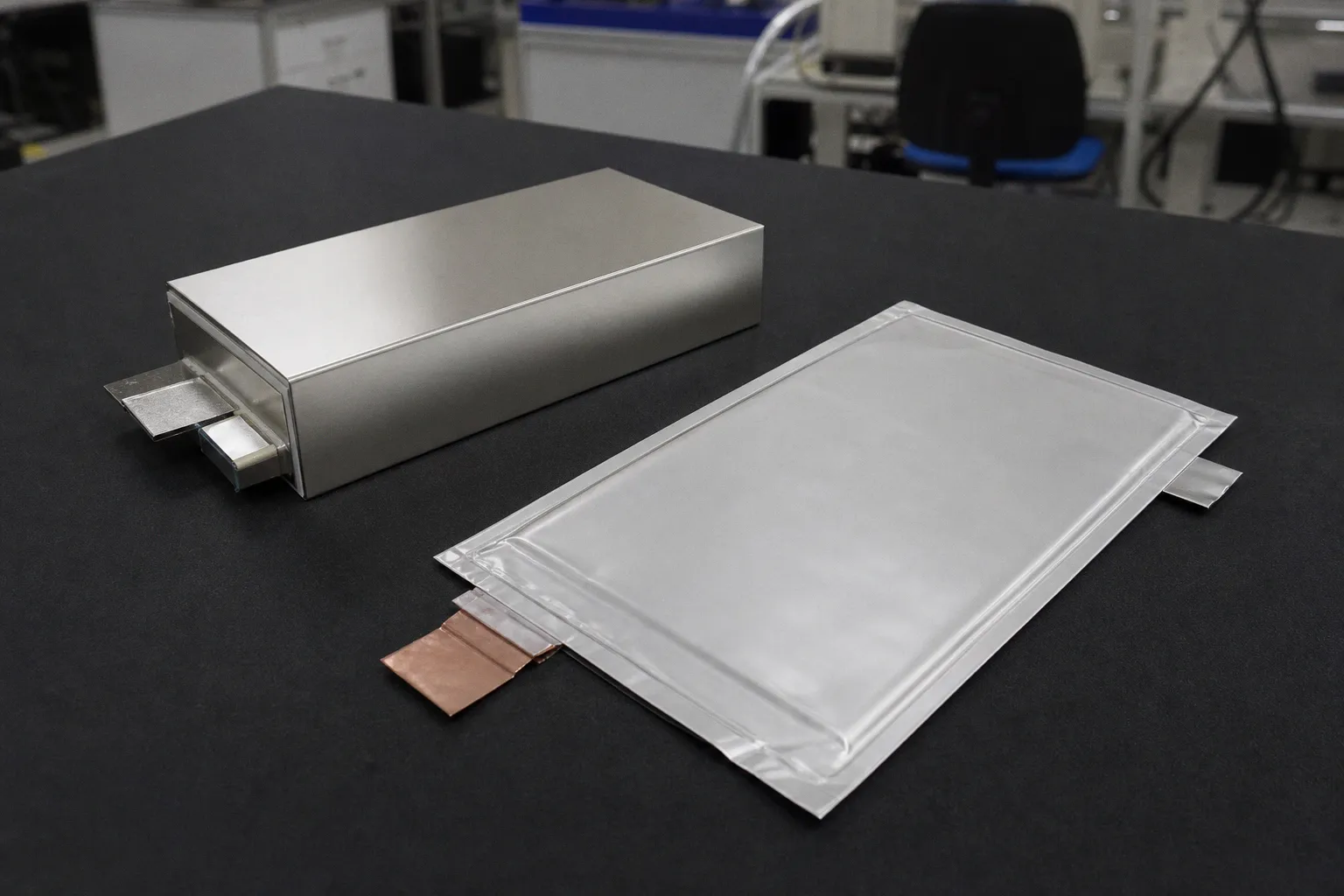
So, what is a solid-state battery? In the strict sense, it is a battery that replaces the flammable liquid or gel electrolyte used in conventional lithium-ion cells with a solid electrolyte. That material may be ceramic oxide, sulfide, polymer, or a composite. The architecture has clear theoretical advantages. The manufacturing reality is much less settled.
The headline numbers are substantial: roughly 400–500 Wh/kg is the common solid-state target, versus around 250–300 Wh/kg for the best current liquid-electrolyte lithium-ion cells. But a target cell is not a 90-kWh automotive pack that can survive ten years of vibration, thermal cycling, DC fast charging, and warranty exposure.
For an EV buyer, the practical answer is direct: do not postpone a good current EV purchase waiting for a cheap, mass-market all-solid-state car. The useful milestone remains 2030 or later.
The fundamental shift: solid electrolyte versus liquid chemistry
A conventional lithium-ion battery has four functional parts: an anode, a cathode, separators, and a liquid or gel electrolyte that carries lithium ions between the electrodes. In most modern EV cells, the electrolyte is an organic liquid. It works well at scale. It also brings limits.
The liquid electrolyte is flammable. If a cell is overheated, punctured, improperly charged, or damaged by an internal defect, the electrolyte can contribute to thermal runaway. Modern packs manage that risk with cell spacing, thermal barriers, cooling plates, pressure vents, battery-management software, and pack-level isolation. Those systems work. They also add mass, cost, and engineering complexity.
An all-solid-state battery replaces that liquid medium with a solid ion-conducting layer. In principle, this enables several changes:
- A thinner and potentially lighter cell architecture, improving pack-level energy density.
- A higher likelihood of using a lithium-metal anode, which has far greater theoretical capacity than graphite.
- Lower fire risk because there is no volatile liquid electrolyte to ignite.
- Higher tolerance for fast charging, if the interfaces and current distribution remain stable.
- Less dependence on bulky pack-level containment hardware over the long term.
That is the basis for the solid-state battery advantages usually cited by manufacturers. The critical qualifier is “if.” Replacing liquid with solid does not remove electrochemistry. It makes contact between materials harder.
| Parameter | Current liquid-electrolyte lithium-ion | All-solid-state target |
|---|---|---|
| Electrolyte | Liquid or gel | Ceramic, sulfide, polymer, or composite solid |
| Top-tier cell energy density | About 250–300 Wh/kg | About 400–500 Wh/kg target |
| Fire exposure | Managed through pack design and thermal controls | Reduced due to nonflammable electrolyte |
| Fast-charge potential | Proven, but often limited by heat and lithium plating | 5–12 minutes to 80% is projected |
| Manufacturing maturity | High-volume global production | Prototype and pilot-line stage |
| Current production cost | Established supply chain | Estimated at 4–8 times higher |
| Typical manufacturing yield | About 85–95% | About 60–75% |
The distinction matters because many announcements use “solid-state” as a catch-all label. It should not be.
A semi-solid battery still contains a liquid or gel component. It may use a more solid-rich electrolyte system, different electrode construction, or a partially solid separator. It can deliver meaningful energy-density gains. It is not an all-solid-state cell.
A solid-state label does not describe a single battery chemistry. It describes an electrolyte architecture. The interface engineering determines whether that architecture works.
Solid-state battery vs. lithium-ion: the hard part is the interface
Liquid electrolytes are forgiving. They wet the porous surfaces of the anode and cathode. They flow into microscopic gaps. A solid electrolyte cannot do that.
Instead, a solid-state cell needs durable physical contact between solid electrode materials and a solid electrolyte layer. Under charging and discharging, electrodes expand and contract. Temperature changes create additional dimensional movement. A small gap at the interface raises resistance. Higher resistance creates heat. Heat reduces usable charge power and accelerates degradation.
This is one reason solid-state battery claims need more than a Wh/kg figure. The relevant data set includes:
- Ionic conductivity across the electrolyte at automotive operating temperatures.
- Interfacial resistance after repeated charge-discharge cycles.
- Pressure requirements needed to maintain electrode contact.
- Peak charge rate at low and high state of charge.
- Capacity retention after fast-charge cycling.
- Performance in sub-freezing conditions.
- Defect tolerance at cell and pack scale.
Some solid-state manufacturing approaches use warm isostatic pressing at roughly 6,000 atmospheres to compact materials and reduce interface resistance. That number explains the gap between a promising prototype and a low-cost automotive production line. A process that depends on extreme pressure is not automatically impossible to scale. But it is not a drop-in replacement for current lithium-ion coating, stacking, filling, formation, and aging equipment.
The other major bottleneck is lithium dendrite growth.
Dendrites are microscopic metal structures that can form when lithium deposits unevenly on the anode during charging. They can grow through the electrolyte and create an internal short circuit. Solid electrolytes were once treated as a near-complete solution because a rigid layer should physically block these structures. Testing has shown that the problem is more complicated. Defects, grain boundaries, mechanical stress, uneven current density, and imperfect interfaces can provide paths for dendrite propagation.
This is especially relevant to the fast-charging promise. Charging a large battery in five to twelve minutes requires very high current. High current increases the penalty for non-uniform ion transport. If a cell cannot distribute ions evenly through the electrode interface, it risks lithium plating, localized heating, and eventual shorting.
Current lithium-ion packs already operate near several practical limits:
1. Thermal load rises rapidly at high charging power. A pack may accept a strong peak charge rate for a short period, then taper as cell temperature or state of charge rises.
2. The charge curve matters more than the peak number. A 350-kW headline rate means little if the battery holds it for two minutes.
3. Cold cells charge slowly because lithium-ion mobility falls. Preconditioning improves the situation but consumes energy and time.
4. Repeated high-C-rate charging affects long-term capacity retention. Battery software manages this conservatively for a reason.
A mature all-solid-state pack could improve several of these constraints. It has not yet proved that it can remove them at mass-market cost.
Semi-solid batteries are the bridge, not the destination
The strongest real-world evidence so far comes from semi-solid systems. Nio’s 150-kWh pack, developed with WeLion, is a useful case because it demonstrates what incremental electrolyte changes can do before all-solid-state cells arrive.
The pack weighs 676 kg. That is only 20 kg more than Nio’s 100-kWh liquid-electrolyte pack, despite carrying 50% more nominal capacity. In a live-streamed Nio ET7 test, the 150-kWh semi-solid pack covered 1,044 km, or 649 miles, in real-world driving.
That result is technically significant. It shows that higher energy density can reach a vehicle without an absurd mass penalty. It does not prove that all-solid-state technology is commercially solved.
The pack still contains liquid or gel electrolyte. It therefore avoids some of the most difficult all-solid solid-solid contact problems. It also remains an expensive, limited-volume product rather than the default battery option for a mass-market crossover.
This distinction is where EV solid-state battery timeline discussions often fail. Semi-solid cells are already entering vehicles. They are an intermediate product. Their existence does not mean a fully solid electrolyte architecture is ready for ten-million-unit automotive production.
For buyers, semi-solid systems may eventually matter more in the near term than pure solid-state packs. They can improve energy density while remaining closer to existing cell manufacturing methods. The gain may arrive first in premium long-range vehicles, where a large and costly pack is easier to justify.
Semi-solid is a commercial bridge. All-solid-state remains a manufacturing problem disguised as a chemistry breakthrough.
Safety improves, but it does not become irrelevant
Solid-state battery safety is a real advantage, but the common version of the claim is too broad. A nonflammable solid electrolyte reduces one major source of thermal-runaway risk. It does not make an EV battery immune to damage, internal shorts, overcharging, or heat generated by high resistance.
A battery pack is a system. Safety depends on:
- Cell chemistry and separator or electrolyte behavior.
- Current collectors and electrode stability.
- Cooling-loop design and temperature sensing.
- Contactor operation and high-voltage isolation.
- Crash structure around the pack enclosure.
- Software logic that limits charge and discharge power.
- Propagation barriers between cells and modules.
An all-solid-state cell that develops a dendrite-induced short circuit still has an electrical failure. A lithium-metal anode still stores a large amount of energy. A pack still requires robust sensing, thermal control, and containment.
The likely outcome is not “solid-state batteries cannot catch fire.” It is a lower probability of electrolyte-fed thermal propagation, combined with different failure modes that manufacturers must validate. That is an improvement. It is not a reason to eliminate pack-level safety engineering.
Why the cost curve matters more than the laboratory result
The automotive battery business does not reward a cell that works once. It rewards a cell that works identically millions of times across production lots.
Solid-state battery production costs are currently estimated at four to eight times those of conventional lithium-ion batteries. Capital investment for production lines is estimated at two to three times higher. Yield rates sit around 60–75%, compared with roughly 85–95% for established lithium-ion manufacturing.
Those figures are the central reason the technology is not yet in affordable EVs.
A low yield means a high scrap rate. A high scrap rate means each usable cell absorbs the cost of material, processing, equipment time, and quality control from cells that fail inspection. That problem is amplified by demanding material purity and precision stacking requirements. A microscopic defect that might be tolerable in a liquid-electrolyte cell can become a failure path in a solid-state design.
There are also supply-chain questions that remain open:
- Sulfide electrolytes can offer high ionic conductivity, but they can be sensitive to moisture and require tightly controlled processing.
- Oxide electrolytes can be chemically stable, but their rigidity can worsen interface contact and complicate fabrication.
- Polymer systems may be easier to process, but often face conductivity limitations at lower temperatures.
- Lithium-metal handling adds manufacturing and safety requirements beyond those used for graphite anodes.
No single electrolyte family has won the production argument. That is normal at this stage. It also means no buyer should treat a manufacturer’s target date as a guaranteed product launch date.
The roadmap says 2027. The industrial schedule says 2030.
Toyota has targeted a consumer-ready solid-state EV in the 2027–2028 window. Nissan has identified 2028 as its target. Hyundai does not plan a solid-state EV launch before 2030.
Those dates should be read as different milestones, not as a synchronized market transition. A first production vehicle can use an expensive battery in limited numbers. That is very different from a battery available across multiple models, built in high volume, supported by warranty data, and priced close to current lithium-ion packs.
CATL chairman Robin Zeng stated in June 2026 that all-solid-state technology was at level 4 on a nine-point Technology Readiness Level scale. In practical terms, that places it in laboratory validation and prototype development rather than mature, scaled automotive production.
China is also preparing an official solid-state EV battery standard expected in July 2026. The need for that standard is itself revealing. The market still needs consistent definitions separating semi-solid, mixed liquid-solid, and true all-solid-state batteries.
The timeline is therefore easier to parse in three stages:
1. 2026–2028: limited vehicles and validation. Expect prototypes, premium applications, and semi-solid packs. Some all-solid-state demonstrations may reach vehicles, but not broad affordability.
2. 2028–2030: pilot production and qualification. This is the period when manufacturers must prove cycle life, fast-charge durability, cold-weather operation, yields, and pack integration.
3. 2030 onward: potential mass-market expansion. This is the first credible window for meaningful volume, assuming costs and manufacturing yields improve substantially.
None of this makes current lithium-ion technology obsolete. Lithium iron phosphate continues to improve on cost, cycle life, and thermal stability. Nickel-rich chemistries continue to improve energy density. Cell-to-pack structures reduce inactive material. Silicon additions to graphite anodes are already increasing capacity in selected designs. Battery thermal management and charging software are extracting more usable performance from established cells every model year.
Is it worth waiting?
For most buyers, no.
If you need an EV within the next two to four years, buy based on the current vehicle’s measured range, charging curve, battery warranty, cold-weather behavior, and access to home or public charging. Those variables affect ownership now. A future all-solid-state pack does not.
Waiting makes sense only if you do not need a vehicle soon, can tolerate uncertain launch timing, and are willing to pay early-adopter pricing for a first-generation battery system. Even then, the correct comparison is not between today’s lithium-ion EV and a hypothetical 500 Wh/kg battery. It is between a proven vehicle available now and a limited-volume product that must still clear manufacturing, durability, and cost barriers.
Solid-state batteries are technically credible. Their safety and energy-density potential are substantial. The five-minute charging narrative is not yet a consumer product specification. The engineering bottleneck is no longer proving that a solid electrolyte can move lithium ions. It is doing so across millions of cells without dendrites, interface failure, thermal throttling, or uneconomic scrap rates.
The verdict is straightforward: solid-state is worth watching, not worth delaying a sound EV purchase for.